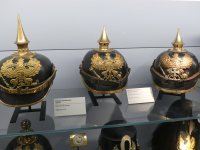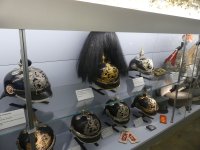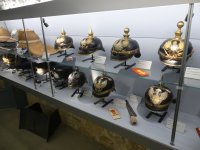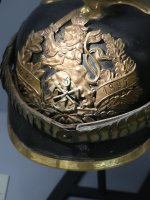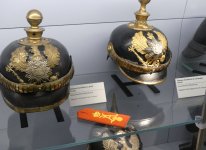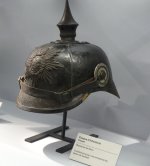
Fort de la Pompelle (2024 Marty)

marty

Active member
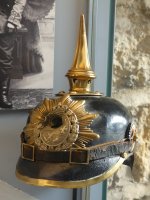
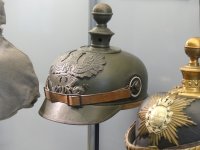
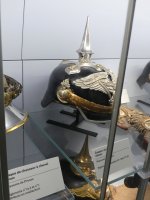
First, all credits to Tony V cause he did an amazing job introducing the full Pompelle new style.
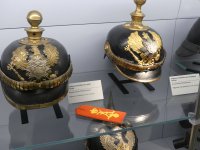
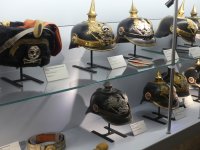
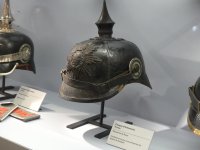
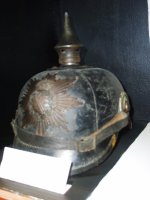
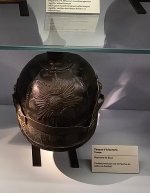
Hereby some extra photos, containing details I like: the soccer-pickelhaube, waterloo-scrolls,….
Thoughs about Before/After Renovation: Ok, less items to see but I do prefer the new style in general.
It’s cleaner, brighter and you have a better and closer look at the pickelhaubes in detail.
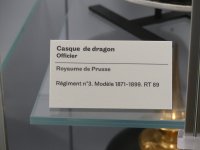
Concerning the ‘mass table overview display’,.... okay no tags but as for me, is perhaps the best solution,
as less headgear would be displayed at final renovation.
Finally, the aim of Pompelle is to attract as many visitors as possible: pickelheads AND pickeldummies as well 😊.
Pompelle have succeeded to transform the old dark/dated museum into todays visit standards.
(my humble opinion😉).
 

Attachments

  • P1140566.JPG
    P1140566.JPG
    960 KB · Views: 46
  • P1140584.JPG
    P1140584.JPG
    826.9 KB · Views: 49
  • P1140583.JPG
    P1140583.JPG
    767.7 KB · Views: 50
  • P1140582.JPG
    P1140582.JPG
    811.1 KB · Views: 49
  • P1140580.JPG
    P1140580.JPG
    792 KB · Views: 47
  • P1140578.JPG
    P1140578.JPG
    878.9 KB · Views: 46
  • P1140577.JPG
    P1140577.JPG
    802.2 KB · Views: 46
  • P1140573.JPG
    P1140573.JPG
    998.2 KB · Views: 46
  • P1140570.JPG
    P1140570.JPG
    891.7 KB · Views: 44
  • P1140568.JPG
    P1140568.JPG
    919.6 KB · Views: 43
  • P1140567.JPG
    P1140567.JPG
    627.4 KB · Views: 45
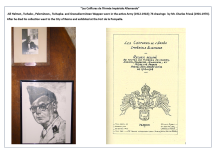
A 1959 bundle of drawings of all the Wappen: by Charles Friesé.
-after he died his collection went to the city of Reims. And displayed in the Fort de la Pompelle. As we know.
-Both Larcade Volumes show lots of pictures of the "Charles Friesé" headgear collection In fact: the Larcade books are a perfect guide trough the-original-old-"Charles Friesé" display.
 

Attachments

  • FB_IMG_1738521637577 (2).jpg
    FB_IMG_1738521637577 (2).jpg
    618.1 KB · Views: 29
  • PHF (5).png
    PHF (5).png
    691.6 KB · Views: 30
Last edited:
It seems that the museum managers should brush up their basics :rolleyes:

A Oldenburg Fuss Artillerie Regiment has never existed...But a Feld Artillerie Regiment (62). And there were no Bataillons in such units, but Batterien. So 2. and 3. Batterie from the 1. Abteilung FAR62 is here correct for the Oldenburg contingent in this unit... 1/ FAR62 and 4., 5., and 6. Batterie of the II Abteilung were prussian.

Philippe

pompelle.jpg
 
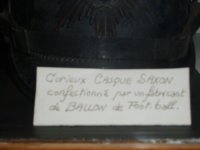
French spelling is very bad. "entreprise de ballon de football" is pretty much meaningless.
A shame in a museum whose mission is education.
I miss the old Pompelle and hand-written tags...
Indeed. The collection lost its soul.
 
French spelling is very bad. "entreprise de ballon de football" is pretty much meaningless.
A shame in a museum whose mission is education.
I miss the old Pompelle and hand-written tags...
Indeed...I remember the handwritten tag...
In J-L. Larcade's Volume I; page 114: #12: ..."sa bombe est constituée de plusieurs quartiers cousus ensemble ce qui le donne un peu l'aspect d'un ballon de foot-ball"...
"The shell of this helmet is made of several pieces of leather; stitched together; giving this helmet the appearance of a football...".

Some pictures: the old display-with the famous handwritten card...And in the new display....
-Seems someone liked to clean/shoeshine the compete helmet...Including the Sachsen Wappen...Must be proud of the result.
 

Attachments

  • france 2010 085.JPG
    france 2010 085.JPG
    673.1 KB · Views: 17
  • france 2010 086.JPG
    france 2010 086.JPG
    478.9 KB · Views: 18
  • 20240523_113209 (1).jpg
    20240523_113209 (1).jpg
    210.1 KB · Views: 17
Last edited:
The Friese collection was magnificent.😇
After being bequeathed to Reims, this collection was ‘manipulated’ by a criminal gang, who, under the pretext of cleaning and correcting the helmets, made ‘reproductions’ of rare plaques, eagles from the Royal Guard, Saxon Reiter lions, etc. These reproductions were then exchanged for the originals... and the helmets were returned to the museum curator, who was completely unaware of what had happened. This was around 1975-80.:eek:
When I was young, I saw the Friese collection intact. After that, I went to see it about every 10 years. Each time the exhibition is rearranged, there are fewer pieces on display... If the missing items are in storage, everything is fine... But???
Regarding French museums, I miss the old formats that displayed uniforms and weapons, trench scenes, cania, scenes, Feldlazareths, etc.
Currently, there are very few objects and uniforms, but wargames for children, cinemas, and other videos that can be watched in your living room on history channels! :rolleyes:
For example, Péronne (WWI), Caen (WWII), etc., large spaces... empty or almost empty.
Fortunately, in Meaux (Jean-Pierre Verney collection), there are thousands of objects, hundreds of uniforms, a Renault FT tank, a horse-drawn ambulance, a German field ambulance, a French field ambulance, an airplane... at least... Tangible, real, period pieces, historical artifacts... no virtual, digitized, 3D images...👍


😪I'm going back at the end of the month to see the two private museums (owned by David B.): La Targette and Notre-Dame de Lorette. They're closing on December 31st and will disappear. David tried to sell his incredible collection to regional cultural institutions, which snubbed it... for lack of funds. Some Americans have already bought a 75mm cannon and other items. These collections will probably be dispersed at auction... to the delight of:
---auctioneers.
---dealers.
---collectors.

That's the silver lining.😜

The public will still be able to watch films like "Apocalypse La Somme" or "Apocalypse Verdun" at the Lorette Memorial.😁
 
The Friese collection was magnificent.😇
After being bequeathed to Reims, this collection was ‘manipulated’ by a criminal gang, who, under the pretext of cleaning and correcting the helmets, made ‘reproductions’ of rare plaques, eagles from the Royal Guard, Saxon Reiter lions, etc. These reproductions were then exchanged for the originals... and the helmets were returned to the museum curator, who was completely unaware of what had happened. This was around 1975-80.:eek:
When I was young, I saw the Friese collection intact. After that, I went to see it about every 10 years. Each time the exhibition is rearranged, there are fewer pieces on display... If the missing items are in storage, everything is fine... But???
Regarding French museums, I miss the old formats that displayed uniforms and weapons, trench scenes, cania, scenes, Feldlazareths, etc.
Currently, there are very few objects and uniforms, but wargames for children, cinemas, and other videos that can be watched in your living room on history channels! :rolleyes:
For example, Péronne (WWI), Caen (WWII), etc., large spaces... empty or almost empty.
Fortunately, in Meaux (Jean-Pierre Verney collection), there are thousands of objects, hundreds of uniforms, a Renault FT tank, a horse-drawn ambulance, a German field ambulance, a French field ambulance, an airplane... at least... Tangible, real, period pieces, historical artifacts... no virtual, digitized, 3D images...👍


😪I'm going back at the end of the month to see the two private museums (owned by David B.): La Targette and Notre-Dame de Lorette. They're closing on December 31st and will disappear. David tried to sell his incredible collection to regional cultural institutions, which snubbed it... for lack of funds. Some Americans have already bought a 75mm cannon and other items. These collections will probably be dispersed at auction... to the delight of:
---auctioneers.
---dealers.
---collectors.

That's the silver lining.😜

The public will still be able to watch films like "Apocalypse La Somme" or "Apocalypse Verdun" at the Lorette Memorial.😁
Interesting...Sad to read how they raided and scavenged this once magnificent collection.
 
The Friese collection was magnificent.😇
After being bequeathed to Reims, this collection was ‘manipulated’ by a criminal gang, who, under the pretext of cleaning and correcting the helmets, made ‘reproductions’ of rare plaques, eagles from the Royal Guard, Saxon Reiter lions, etc. These reproductions were then exchanged for the originals... and the helmets were returned to the museum curator, who was completely unaware of what had happened. This was around 1975-80.:eek:
When I was young, I saw the Friese collection intact. After that, I went to see it about every 10 years. Each time the exhibition is rearranged, there are fewer pieces on display... If the missing items are in storage, everything is fine... But???
Regarding French museums, I miss the old formats that displayed uniforms and weapons, trench scenes, cania, scenes, Feldlazareths, etc.
Currently, there are very few objects and uniforms, but wargames for children, cinemas, and other videos that can be watched in your living room on history channels! :rolleyes:
For example, Péronne (WWI), Caen (WWII), etc., large spaces... empty or almost empty.
Fortunately, in Meaux (Jean-Pierre Verney collection), there are thousands of objects, hundreds of uniforms, a Renault FT tank, a horse-drawn ambulance, a German field ambulance, a French field ambulance, an airplane... at least... Tangible, real, period pieces, historical artifacts... no virtual, digitized, 3D images...👍


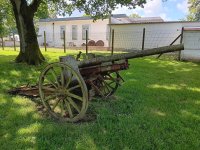
😪I'm going back at the end of the month to see the two private museums (owned by David B.): La Targette and Notre-Dame de Lorette. They're closing on December 31st and will disappear. David tried to sell his incredible collection to regional cultural institutions, which snubbed it... for lack of funds. Some Americans have already bought a 75mm cannon and other items. These collections will probably be dispersed at auction... to the delight of:
---auctioneers.
---dealers.
---collectors.

That's the silver lining.😜

The public will still be able to watch films like "Apocalypse La Somme" or "Apocalypse Verdun" at the Lorette Memorial.😁

Damn,...is he realy really closing down ??:eek::eek::eek:
I thought the last auction only contained extra items ??
Haven't seen David at Waver so I'm a bit in the dark here.....
 
That's sad to hear.
I only visited the museum at Lorette once, last year. But Ibwas reallt impressie by the collection and the diorama's.

The pieces outside were unfortunately somewhat worn down by the natural elements.

20240611_105832.jpg

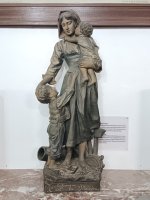
I was impressed by this statue in the museum as well.

20240611_121636.jpg
 
Indeed...I remember the handwritten tag...
In J-L. Larcade's Volume I; page 114: #12: ..."sa bombe est constituée de plusieurs quartiers cousus ensemble ce qui le donne un peu l'aspect d'un ballon de foot-ball"...
"The shell of this helmet is made of several pieces of leather; stitched together; giving this helmet the appearance of a football...".

Some pictures: the old display-with the famous handwritten card...And in the new display....
-Seems someone liked to clean/shoeshine the compete helmet...Including the Sachsen Wappen...Must be proud of the result.

This doesn't surprise me yet, it's hard to believe that the person responsible for curating this collection could allow something like that to happen.
 
The problem stems from the "training" of the directors or curators.

--A private museum is run by someone passionate about the history of the World War I era, for example. They know the uniforms and history of that period inside and out (or by heart).

--A "National" or "Departmental" museum is run by a civil servant from the Ministry of Culture. They were trained at the École des Chartes or the École du Louvre. They know about Pharaonic Egypt, read and write Ancient Greek and Latin, but know neither the Ludendorff Directive, nor the Battle of Tannenberg, let alone the Chemin des Dames.
This explains that.
 
A 1959 bundle of drawings of all the Wappen: by Charles Friesé.
-after he died his collection went to the city of Reims. And displayed in the Fort de la Pompelle. As we know.
-Both Larcade Volumes show lots of pictures of the "Charles Friesé" headgear collection In fact: the Larcade books are a perfect guide trough the-original-old-"Charles Friesé" display.
One of my best friends' father was an architect in the city of Nantes, in Western France, and his architect colleague was... Charles Friese. The old gentleman told me once that Friese had displayed a part of his collection in his office, on multiple shelves. He added that the wall paper became discoloured with time and exposure to light, except where protected by those items. When the collection was moved you could still see the "ghosts" of spiked helmets on the walls. He had been impressed by this vision, which remained as his most vivid memory of Charles Friese's trophies, many years later...
 
-A "National" or "Departmental" museum is run by a civil servant from the Ministry of Culture. They were trained at the École des Chartes or the École du Louvre. They know about Pharaonic Egypt, read and write Ancient Greek and Latin, but know neither the Ludendorff Directive, nor the Battle of Tannenberg, let alone the Chemin des Dames.
This explains that.
On the other hand, they are sometimes very generous people. You can enter a room through the window, break open glass cabinets, help yourself with items of your choice, and leave.
 
Indeed...I remember the handwritten tag...
In J-L. Larcade's Volume I; page 114: #12: ..."sa bombe est constituée de plusieurs quartiers cousus ensemble ce qui le donne un peu l'aspect d'un ballon de foot-ball"...
"The shell of this helmet is made of several pieces of leather; stitched together; giving this helmet the appearance of a football...".

Some pictures: the old display-with the famous handwritten card...And in the new display....
-Seems someone liked to clean/shoeshine the compete helmet...Including the Sachsen Wappen...Must be proud of the result.
Hey! The chin strap isn't the same anymore...🥴 I preferred the old one, the new one must smell like fresh leather!🙄
 
--A private museum is run by someone passionate about the history of the World War I era, for example. They know the uniforms and history of that period inside and out (or by heart).
You dream of having one of those among your friends or relatives. Another friend of mine works as a voluntary curator at the small HR15 museum in Wandsbek. He said that many of the displayed items were donated by families of hussars. Being only interested in headgear I asked about busbies. No luck. He said the very few that were collected had been so heavily modified that they lost all value.
 
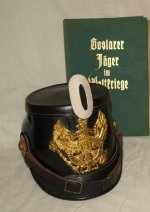
On the other hand, we also have some small but pretty nice museums, having owned a very fine collection of authentic objects. As Bruno says in the case of the Wandsbek Museum, these small local museums were able to come into being thanks to post-war donations from veterans of unit(s) from the garrison town. Very often, these veterans were organized into veterans' circles that met regularly until the beginning of the Second World War. This also applies to the Goslar Jäger Museum (JB10, RJB10, RJB23), whose display cases and storage rooms were filled to bursting with authentic objects when it was founded in the 1920s. Then, as time went by, for various reasons (need for space, restructuring of the collection, need for money), some of the stock was sold off to well-informed individuals (collectors and often dealers) who were quick to make their purchases. In the case of the Goslar Museum, M. Sergio. Semino in the late 1980s or early 1990s.

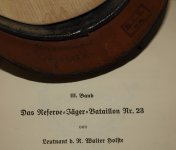
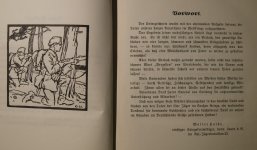
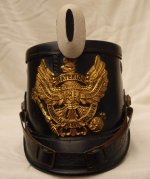
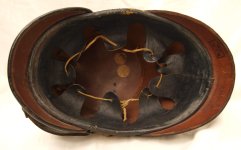
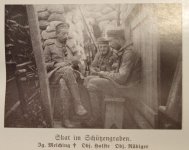
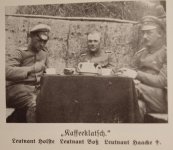
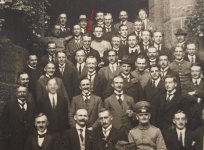
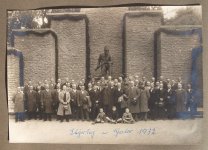
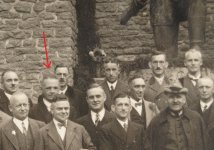
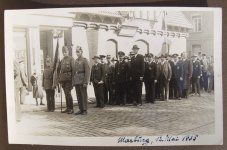
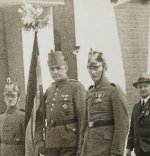
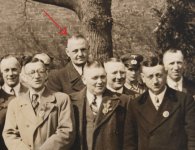
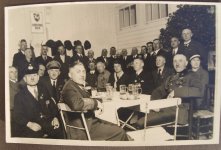
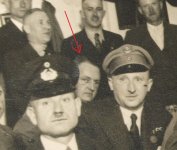
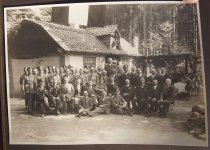
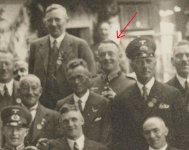
This can be retroactively considered both a curse and a blessing. In this way, it was possible for some passionate collectors to access rare and authentic pieces that are practically impossible to find on the market today. Thus, in December 2023, I had the good fortune to acquire from Mr. Semino, just before the almost total dissolution of the last pieces of his Frankfurt collection, a rare named JB10 Tschako, dated 1914, assigned in August 1914 to an 18-year-old war volunteer from Goslar, Walter Holste. This man was mobilized in the RJB23 and rose through the ranks (Gefreiter, Oberjäger, Vizefeldwebel) to be promoted to Leutnant in June 1916. Until December 1917, when he was seriously wounded through hand grenades and lost an eye in the Italian Alps (he wore a glass eye later), he took part in all the battles of the RJB23 (Flandern with the first gas attack, spring 1915, Carpathian moutains, Bukowina / Ukraine, Venetian Alps). The icing on the cake was that this officer went on to write the history of the RJB23, published in 1934, largely based on his own war diaries. As a result, there are also a few photos of him in this book.

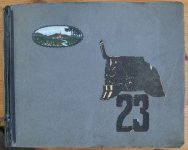
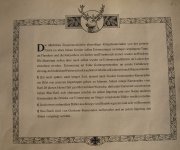
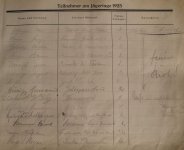
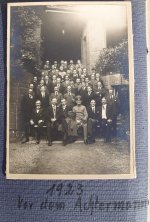
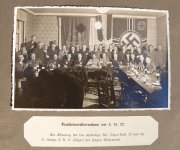
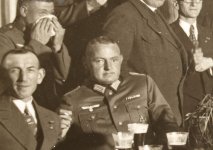
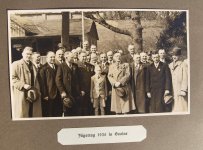
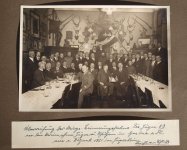
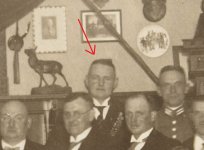
But even better, and as chance often works miracles, this year I came across a photo album of veterans of the RJB23 for sale on eBay Germany. I managed to buy it, not too cheaply, but it was worth it. This album meticulously documents most of the post-war reunions of the former Goslar Jäger and was made available at these periodic gatherings so that each veteran could sign it and state their current address. It also contains a number of photographs showing Walter Holste at these events, dating back to 1939. There is no doubt that this album was also part of the Goslar museum and was sold to a private individual at some point. In any case, I am extremely happy to have been able to reunite these two historical pieces several decades later. I would like to share with you this small historical treasure.

Philippe

walter22.jpg
walter21.JPG
_C222445.JPG
walter.JPG
walter9.JPG
holste21.JPG
holste22.JPG
 
Last edited:
Back
Top