

Kaikun2001
Well-known member
I thought I would share my Bavarian Cap, that I found inside a thriftstore where I live. The condition is not the best, the fun part was doing research for this soldier and bringing his story to light. May he rest in peace.
Here is some basic information I have compiled.
Ludwig Mühlbauer
Ludwig Mühlbauer (1886 – 1915) was a Bavarian infantry soldier in the Imperial German Army during the First World War. He is chiefly remembered as one of the millions of young Bavarians who fell in the early campaigns on the Western Front, symbolising the heavy losses suffered by southern German regiments in 1914–1915.
Key facts
Early life and background
Little is documented about Mühlbauer’s civilian background, but like many young men of rural Bavaria, he would have been subject to compulsory military service in the pre-war years. Bavaria maintained its own army within the Imperial German military structure, preserving distinct uniforms and regimental traditions.
Military service
At the outbreak of war in 1914, Bavarian infantry regiments were mobilised as part of the German Sixth Army under Crown Prince Rupprecht. Mühlbauer’s unit was likely engaged in the fierce early battles in Lorraine and northern France. These operations saw extremely high casualty rates among Bavarian divisions as trench warfare took hold by late 1914.
Death and remembrance
Mühlbauer was killed in 1915, during a period of intense positional fighting that claimed thousands of lives without major territorial change. His name appears in local Bavarian casualty lists compiled during the war. Soldiers such as Mühlbauer are today commemorated in village memorials, church plaques, and the Bavarian State Archives’ rolls of honour, representing the generation lost to industrial-scale conflict.
Ludwig Mühlbauer
Birth and Family Background
Ludwig Mühlbauer was born on 26 October 1886 in Hengersberg, a rural market town in the Bezirksamt Deggendorf, Lower Bavaria, Kingdom of Bavaria (German Empire). His birth was officially registered with the local Standesamt, and the civil birth record was later annotated with a marginal death notice.
He was born into a Catholic rural family. His parents were:
The family lived continuously in Hengersberg and belonged to the agrarian working population typical of Lower Bavaria in the late 19th century. Ludwig grew up with several siblings born between 1872 and 1883, indicating a large household and shared economic responsibilities.
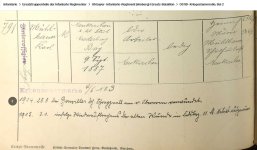
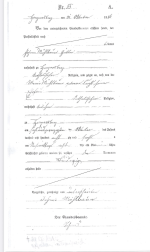
A marginal annotation (†) in Ludwig Mühlbauer’s civil birth record records his death on 22 June 1915, confirming official notification to the civil authorities and closing the civil registry record of his life.
Civilian Life and Occupation
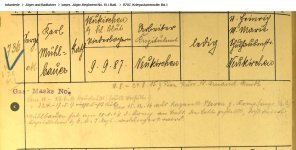
Before military service, Ludwig Mühlbauer’s civilian status is recorded in his military Kriegsstammrolle under Lebensstellung (Stand, Gewerbe) as:
Häusler
In Bavarian social terminology, a Häusler was a smallholder or cottager—a man who owned or occupied a small house with little or no farmland and who typically worked as a rural laborer, farmhand, or wage worker for larger farms. This status placed him below a full farmer (Bauer) in the rural social hierarchy.
He was unmarried (ledig) and had no wife or children recorded at the time of mobilization. His residence remained Hengersberg, indicating that he lived and worked locally rather than migrating for industrial labor.
Pre-War Military Service
Ludwig Mühlbauer entered the Bavarian Army on 18 November 1904 at the age of 18. He served in the:
After completing his compulsory service, he was transferred to the reserve on 17 September 1906. He then returned to civilian life but remained liable for recall in the event of war, as was standard for reservists of the German Army.
World War I Service
Following the outbreak of the First World War, Ludwig Mühlbauer was mobilized on 4 August 1914. He was assigned to:
The regiment operated on the Western Front, particularly in Lorraine, an area that saw intense fighting in 1914–1915. Service in this sector involved trench warfare, artillery bombardment, patrol actions, and repeated engagements under harsh conditions.
Wounding and Death
On 1 December 1914, Ludwig Mühlbauer was wounded in action. He survived for several months after being wounded, indicating that his injuries were serious but not immediately fatal.
Despite medical treatment, he died of the effects of his wounds on 22 June 1915 in Ban-de-Sapt, Département des Vosges, Lorraine, France.
The date of death is confirmed by:
This convergence of military and civil sources establishes the date beyond dispute.
Burial
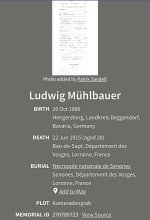
Ludwig Mühlbauer was buried in a Kameradengrab (communal grave) at the:
His name appears in burial records and on memorial listings associated with the cemetery. The communal grave reflects common wartime burial practice for soldiers who died in medical facilities or rear areas during prolonged fighting.
Historical Significance
Ludwig Mühlbauer represents the typical Bavarian reservist infantryman of the First World War:
His life illustrates the human cost of early industrial warfare and the fate of countless men whose names survive only through careful archival reconstruction.
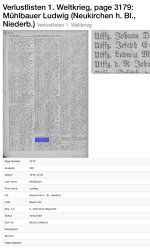
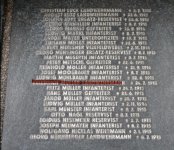
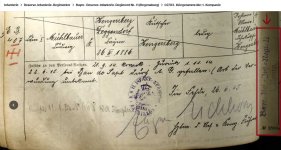
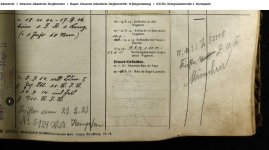
Ludwig Mühlbauer in the wounded list on December 1 1914
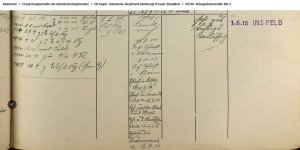
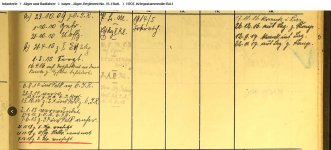
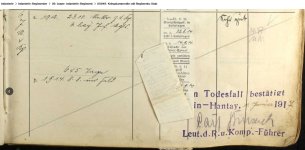
Record of Mühlbauers Military Service.
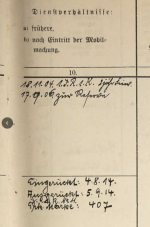
Information about Ludwig Mühlbauer
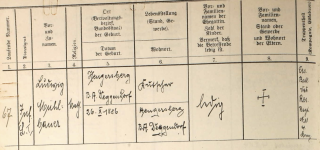
Ludwigs birthrecord. This is scanned directly from the archives in hengersberg. Notice the annotation ”cross 22-06 1915 Gefallen in Frankreich”
Picture of Ludwig Mühlbauers resting place information
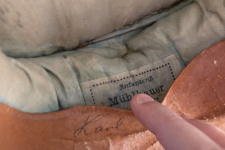
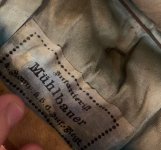
The marking inside Mühlbauers cap
Reads the following 4. Kompanie, K.B. 6. Infanterie-Regiment.
“K.B.” — Königlich Bayerisch (Royal Bavarian)


This is all the information I have found about Ludwig, I found the birth records of his siblings. Let me know if I missed anything.
Regards Kai
Here is some basic information I have compiled.
Ludwig Mühlbauer
Ludwig Mühlbauer (1886 – 1915) was a Bavarian infantry soldier in the Imperial German Army during the First World War. He is chiefly remembered as one of the millions of young Bavarians who fell in the early campaigns on the Western Front, symbolising the heavy losses suffered by southern German regiments in 1914–1915.
Key facts
- Born: 1886, Kingdom of Bavaria, German Empire
- Died: 1915, Western Front, World War I
- Service: Bavarian Infantry Regiment, Imperial German Army
- Conflict: First World War (1914–1918)
- Commemoration: Listed among Bavarian war dead remembered in regional memorial rolls
Early life and background
Little is documented about Mühlbauer’s civilian background, but like many young men of rural Bavaria, he would have been subject to compulsory military service in the pre-war years. Bavaria maintained its own army within the Imperial German military structure, preserving distinct uniforms and regimental traditions.
Military service
At the outbreak of war in 1914, Bavarian infantry regiments were mobilised as part of the German Sixth Army under Crown Prince Rupprecht. Mühlbauer’s unit was likely engaged in the fierce early battles in Lorraine and northern France. These operations saw extremely high casualty rates among Bavarian divisions as trench warfare took hold by late 1914.
Death and remembrance
Mühlbauer was killed in 1915, during a period of intense positional fighting that claimed thousands of lives without major territorial change. His name appears in local Bavarian casualty lists compiled during the war. Soldiers such as Mühlbauer are today commemorated in village memorials, church plaques, and the Bavarian State Archives’ rolls of honour, representing the generation lost to industrial-scale conflict.
Ludwig Mühlbauer
Birth and Family Background
Ludwig Mühlbauer was born on 26 October 1886 in Hengersberg, a rural market town in the Bezirksamt Deggendorf, Lower Bavaria, Kingdom of Bavaria (German Empire). His birth was officially registered with the local Standesamt, and the civil birth record was later annotated with a marginal death notice.
He was born into a Catholic rural family. His parents were:
- Father: Johann Mühlbauer, occupation recorded as Bauer (farmer)
- Mother: Maria Mühlbauer, née Gruber
The family lived continuously in Hengersberg and belonged to the agrarian working population typical of Lower Bavaria in the late 19th century. Ludwig grew up with several siblings born between 1872 and 1883, indicating a large household and shared economic responsibilities.
A marginal annotation (†) in Ludwig Mühlbauer’s civil birth record records his death on 22 June 1915, confirming official notification to the civil authorities and closing the civil registry record of his life.
Civilian Life and Occupation
Before military service, Ludwig Mühlbauer’s civilian status is recorded in his military Kriegsstammrolle under Lebensstellung (Stand, Gewerbe) as:
Häusler
In Bavarian social terminology, a Häusler was a smallholder or cottager—a man who owned or occupied a small house with little or no farmland and who typically worked as a rural laborer, farmhand, or wage worker for larger farms. This status placed him below a full farmer (Bauer) in the rural social hierarchy.
He was unmarried (ledig) and had no wife or children recorded at the time of mobilization. His residence remained Hengersberg, indicating that he lived and worked locally rather than migrating for industrial labor.
Pre-War Military Service
Ludwig Mühlbauer entered the Bavarian Army on 18 November 1904 at the age of 18. He served in the:
- 2. Königlich Bayerisches Infanterie-Regiment „Kronprinz“
- 18.11.04 I.R. 2. K. Ingolstadt
After completing his compulsory service, he was transferred to the reserve on 17 September 1906. He then returned to civilian life but remained liable for recall in the event of war, as was standard for reservists of the German Army.
World War I Service
Following the outbreak of the First World War, Ludwig Mühlbauer was mobilized on 4 August 1914. He was assigned to:
- 6. Königlich Bayerisches Infanterie-Regiment
- 4. Kompanie
- Rank: Gefreiter (Lance Corporal)
The regiment operated on the Western Front, particularly in Lorraine, an area that saw intense fighting in 1914–1915. Service in this sector involved trench warfare, artillery bombardment, patrol actions, and repeated engagements under harsh conditions.
Wounding and Death
On 1 December 1914, Ludwig Mühlbauer was wounded in action. He survived for several months after being wounded, indicating that his injuries were serious but not immediately fatal.
Despite medical treatment, he died of the effects of his wounds on 22 June 1915 in Ban-de-Sapt, Département des Vosges, Lorraine, France.
The date of death is confirmed by:
- German military casualty records
- Burial documentation
- A marginal death entry († 22.6.15) added to his civil birth register in Hengersberg
This convergence of military and civil sources establishes the date beyond dispute.
Burial
Ludwig Mühlbauer was buried in a Kameradengrab (communal grave) at the:
- Nécropole nationale de Senones
- Senones, Département des Vosges, Lorraine, France
His name appears in burial records and on memorial listings associated with the cemetery. The communal grave reflects common wartime burial practice for soldiers who died in medical facilities or rear areas during prolonged fighting.
Historical Significance
Ludwig Mühlbauer represents the typical Bavarian reservist infantryman of the First World War:
- Born into a rural working family
- Employed as a smallholder and laborer
- Conscripted, returned to civilian life, and later mobilized
- Served on the Western Front
- Wounded, endured months of suffering, and died far from home
His life illustrates the human cost of early industrial warfare and the fate of countless men whose names survive only through careful archival reconstruction.
Ludwig Mühlbauer in the wounded list on December 1 1914
Record of Mühlbauers Military Service.
Information about Ludwig Mühlbauer
Ludwigs birthrecord. This is scanned directly from the archives in hengersberg. Notice the annotation ”cross 22-06 1915 Gefallen in Frankreich”
Picture of Ludwig Mühlbauers resting place information
The marking inside Mühlbauers cap
Reads the following 4. Kompanie, K.B. 6. Infanterie-Regiment.
“K.B.” — Königlich Bayerisch (Royal Bavarian)
This is all the information I have found about Ludwig, I found the birth records of his siblings. Let me know if I missed anything.
Regards Kai


 . Bavarian pieces are always very well marked, I was happy I was able to trace this one, some others I have had some bad luck with.


 )...Unfortunately, as we do not know his fist name and his native city, it will be very difficult to track him or it will cost a lot of time to track him....
 And sorry, because your first name, I though you were located in Germany...Kai is also a common first name in Germany, especially in the northern Schleswig-Holstein where I am living.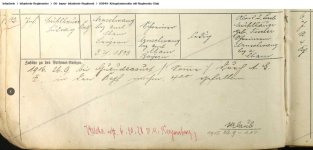
 I do not hope that they have been added later by a unconscious collector or dealer...But I do not think so, because this cap seems to be a private purchased one, that would perfectly match the eventuality of a senior NCO in a Ersatz-Bataillon during the war.