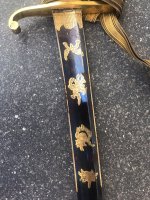
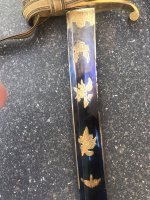
Unidentified French saber?

Kaisersammler

Well-known member
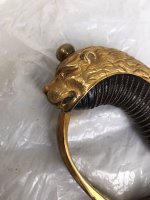
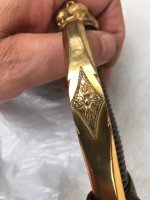
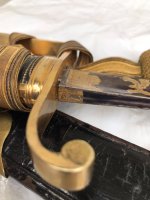
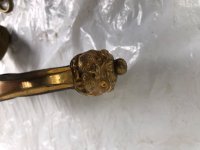
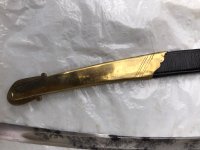
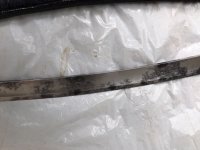
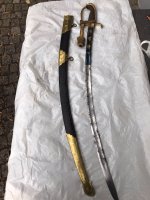
Can anyone tell me what kind of saber this is? I think it's French.
As always, I am very grateful for your help.
 

Attachments

  • IMG-20260722-WA0001.jpg
    IMG-20260722-WA0001.jpg
    347.9 KB · Views: 20
  • IMG-20260722-WA0002.jpg
    IMG-20260722-WA0002.jpg
    370.1 KB · Views: 21
  • IMG-20260722-WA0004.jpg
    IMG-20260722-WA0004.jpg
    233.1 KB · Views: 20
  • IMG-20260722-WA0005.jpg
    IMG-20260722-WA0005.jpg
    186.5 KB · Views: 20
  • IMG-20260722-WA0006.jpg
    IMG-20260722-WA0006.jpg
    180.2 KB · Views: 20
  • IMG-20260722-WA0008.jpg
    IMG-20260722-WA0008.jpg
    274.2 KB · Views: 20
I believe it could be Bavarian from the Napoleonic period. They were an ally of France and were influenced heavily by the style of the times.

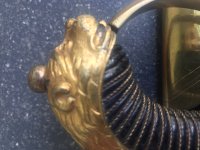
I have seen several Bavarian swords from the period none exactly like this one but several that are very similar especially with the swords shape, design and with the Lion head pommel.

The English also used the lion head pommel with a very similar design I'm 50 50 but hoping for Bavarian.

MFG John Josef
 
Can anyone tell me what kind of saber this is? I think it's French.
As always, I am very grateful for your help.
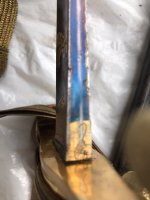
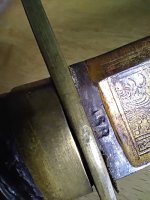
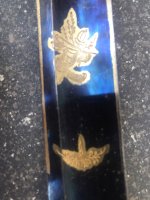
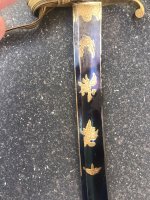
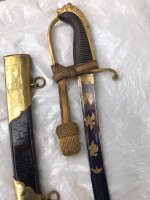
That saber is a masterpiece! You are very fortunate. I've been looking for a Napoleonic era lion head for years but the prices are usually ridiculous. The blade is made in Solingen (swirl on spine of blade) but like most officers swords from the Napoleonic period it could be attributed to any number of states since there is no royal cypher on the blade. Solingen produced blades for all of Europe and the rest of the world eventually. I've seen several similar lion heads attributed to various German confederate states under Napoleonic rule, obviously Bavaria comes to mind first but that's speculation. The basic shape of the pommel is similar to the iconic Austrian prima plana sabers but they're usually made more crudely, and French and Austrian inspired swords are by far the most popular of the 19th century. The longer length would signify cavalry but the leather scabbard would make it earlier 1800s or late 1700s. So technically it could be "ancien regime" as well.
I can't see the other side of the ricasso to see if there are maker's initials or full name. Rule of thumb is if there are only initials and not the full name it was probably produced under French occupation of Solingen. Full manufacturer names are usually pre-napoleonic (revolutionary period) or post. For example "Weyersberg" became "W".
Also, French officers did indeed carry lion head sabers! (along with almost everyone else, it's a very popular design from the 18/19th centuries) before and during the revolution but in my opinion the general construction of your saber indicates Napoleonic, and generally the lion heads tend to be considered German states. However there's always a possibility that it was a French officer as well.
Someone added a much later sword knot, which I can't identify at the moment (I'm not a knot guy) but it may lead you in the right direction. At first it appears German but the top half looks to large if you compare it to German types. Of course this type of knot was also used by many different countries as well.
Generally speaking European officer swords from the 18/19th centuries are very difficult to identify with accuracy unlike the trooper versions. You are very lucky to have such a beautiful specimen of a Solingen Lion head.
Best regards, Geoff
 
Thanks for your opinions. I hadn't realized it would be so hard to recognize him. Here are a few more pictures.
 

Attachments

  • IMG-20260722-WA0009.jpg
    IMG-20260722-WA0009.jpg
    167.4 KB · Views: 9
  • IMG-20260722-WA0010.jpg
    IMG-20260722-WA0010.jpg
    253.9 KB · Views: 9
  • IMG-20260722-WA0011.jpg
    IMG-20260722-WA0011.jpg
    215.7 KB · Views: 8
  • IMG-20260722-WA0012.jpg
    IMG-20260722-WA0012.jpg
    186.4 KB · Views: 9
Thanks for your opinions. I hadn't realized it would be so hard to recognize him. Here are a few more pictures.
Yes, Solingen bladed lion head sabers are a very common theme from the 18/19th centuries, used by almost everyone from the British, Dutch, French, Spanish, Austrian, German states, various S.American countries, etc., and officer swords didn't have regulations like trooper swords in this era. Therefore almost no two are alike.
I love how the lion is more "grotesque" as seen in mid-late 18th century officer swords.
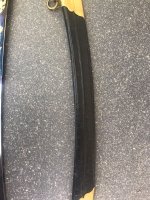
The mostly leather scabbard on what appears to be a mounted officer sword also dates it from earlier; by Napoleonic times scabbards had much more brass, except for infantry swords.
Does the pommel have a solid brass ball on top and not a spot of peened steel? If so, it means it has a screw off pommel which is popular later in the 19th century but not often found on officer swords from earlier periods, but it is certainly possible because the technology existed, and could make it even more interesting and rare.
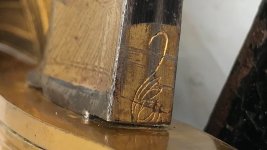
Also complicating factors, It was common to reuse these blades (yours has the Solingen swirl slightly cut off at the bottom, so it could be a remount), and common practice for distributors to import the blades and assemble with locally made hilts, Many countries such as Italy continued to use French inspired swords with Solingen blades just like this well after 1815. I have a few similar swords that I've spent years researching just to be content with the concept that I will probably never know their exact origins.
When I have time I'll try to do some research. You have a very beautiful specimen in outstanding condition my friend.
Edit: Although there are no manufacturer identifiers I can see in your pictures, sometimes there are tiny stamps like this, that can get cut off when remounted (but not always); but often we see no identifiers other than the Solingen swirl and generic etchings as on yours. For some reason, as long as blades have been made in Solingen, all the way through the 20th century, many random blades do not have maker marks, even though most others from the same periods all do.
 

Attachments

  • IMG_20260728_123133427.jpg
    IMG_20260728_123133427.jpg
    382.5 KB · Views: 1
Last edited:
Back
Top