


ccj
Well-known member
Latest
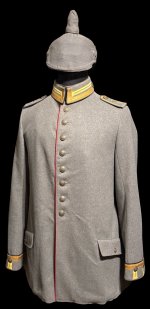
The 4. Garde-Feldartillerie-Regiment was established on 25 March 1899 and garrisoned at Potsdam. In the peacetime organization that prevailed up to 1914, it belonged to the 2. Garde-Feldartillerie-Brigade, also based in Potsdam, which was in turn subordinate to the 2. Garde-Division and the Gardekorps, both headquartered in Berlin.[9] This matches the wearer’s own account of the regiment’s peacetime chain of command. The regiment’s wartime (1914–18) divisional subordination, reported by the wearer as the 2nd and later 5th Guards Divisions, is independently corroborated by a German regimental-history index, which records the 4. Garde-Feldartillerie-Regiment as “unterstellt der 2. Garde-Division und der 5. Garde-Division” (subordinate to the 2nd Guards Division and the 5th Guards Division) across 1914–18.[10] Published wartime orders of battle place the regiment under the 5. Garde-Division’s artillery command (Garde-Artillerie-Kommandeur Nr. 5) by June 1917 and again in April 1918, though no source consulted for this entry gives an exact date for the transfer from the 2nd to the 5th Guards Division.[12]
From mobilization in August 1914, the 2. Garde-Division, and with it the 2. Garde-Feldartillerie-Brigade’s two regiments, took part in the advance into Belgium and the fighting around Namur and Auvelais, the Battle of St. Quentin, and the Battle of the Petit Morin and Fère-Champenoise during the First Battle of the Marne in early September 1914.[11] Fighting near Reims and the Battle of Arras followed in September and October, after which the division settled into positional warfare in Flanders and Artois, including the Battle of the Yser and the Battle of Ypres in October and November 1914, and the fighting at Perthes-les-Hurlus and Beauséjour in Champagne that December.[11] In May 1915 the division was transferred east for the Gorlice-Tarnów Offensive, taking part in the breakout battle itself, the crossing of the San, fighting toward Lemberg (Lviv) and along the Bug, and the subsequent advance across the Galician-Polish frontier, before returning west that autumn to renewed positional warfare at Roye-Noyon.[11] The division fought in the Battle of the Somme in the autumn of 1916 and then held positions at Roye-Noyon and on the Somme into early 1917.[11]
By the time of the published order of battle of 5 June 1917, the regiment appears instead under the newly formed 5. Garde-Division (constituted 10 January 1917), attached to its artillery command, Garde-Artillerie-Kommandeur Nr. 5.[12] With that division it held positions on the Aisne into the spring of 1917, fought in the Double Battle of the Aisne and Champagne in April and May, and then spent an extended period, from late May to late October 1917, in the positional fighting along the Chemin des Dames, including the engagement at Chavignon in late October and rearguard actions south of the Ailette that followed.[12] The division went into the Battle of Cambrai at the end of November 1917 before spending the winter in the Siegfried Position.[12] In 1918 it took part in the German spring offensive (the “Große Schlacht in Frankreich”) from 21 March, fighting on the Avre and around Montdidier and Noyon, then in the Battle of Soissons and Reims in late May and June, the mobile fighting between the Marne and the Vesle in the summer of 1918, and further positional and defensive fighting between the Oise, Aisne, and Marne, in the Argonne, and in the Champagne and Meuse sectors that autumn, before finishing the war holding positions in the Woëvre plain and along the Moselle and marching home through Lorraine after the armistice.[12]
The 4. Garde-Feldartillerie-Regiment was established on 25 March 1899 and garrisoned at Potsdam. In the peacetime organization that prevailed up to 1914, it belonged to the 2. Garde-Feldartillerie-Brigade, also based in Potsdam, which was in turn subordinate to the 2. Garde-Division and the Gardekorps, both headquartered in Berlin.[9] This matches the wearer’s own account of the regiment’s peacetime chain of command. The regiment’s wartime (1914–18) divisional subordination, reported by the wearer as the 2nd and later 5th Guards Divisions, is independently corroborated by a German regimental-history index, which records the 4. Garde-Feldartillerie-Regiment as “unterstellt der 2. Garde-Division und der 5. Garde-Division” (subordinate to the 2nd Guards Division and the 5th Guards Division) across 1914–18.[10] Published wartime orders of battle place the regiment under the 5. Garde-Division’s artillery command (Garde-Artillerie-Kommandeur Nr. 5) by June 1917 and again in April 1918, though no source consulted for this entry gives an exact date for the transfer from the 2nd to the 5th Guards Division.[12]
Wartime Service, 1914–1918
No regiment-specific war diary was consulted for this entry, and the tunic itself carries no marking tying it to a particular battle or date. What follows is drawn instead from the published combat chronicles (Gefechtskalender) of the two divisions to which the regiment is documented as having belonged, and is offered as background on the formations the regiment served within — not as a record of this individual soldier’s personal movements.From mobilization in August 1914, the 2. Garde-Division, and with it the 2. Garde-Feldartillerie-Brigade’s two regiments, took part in the advance into Belgium and the fighting around Namur and Auvelais, the Battle of St. Quentin, and the Battle of the Petit Morin and Fère-Champenoise during the First Battle of the Marne in early September 1914.[11] Fighting near Reims and the Battle of Arras followed in September and October, after which the division settled into positional warfare in Flanders and Artois, including the Battle of the Yser and the Battle of Ypres in October and November 1914, and the fighting at Perthes-les-Hurlus and Beauséjour in Champagne that December.[11] In May 1915 the division was transferred east for the Gorlice-Tarnów Offensive, taking part in the breakout battle itself, the crossing of the San, fighting toward Lemberg (Lviv) and along the Bug, and the subsequent advance across the Galician-Polish frontier, before returning west that autumn to renewed positional warfare at Roye-Noyon.[11] The division fought in the Battle of the Somme in the autumn of 1916 and then held positions at Roye-Noyon and on the Somme into early 1917.[11]
By the time of the published order of battle of 5 June 1917, the regiment appears instead under the newly formed 5. Garde-Division (constituted 10 January 1917), attached to its artillery command, Garde-Artillerie-Kommandeur Nr. 5.[12] With that division it held positions on the Aisne into the spring of 1917, fought in the Double Battle of the Aisne and Champagne in April and May, and then spent an extended period, from late May to late October 1917, in the positional fighting along the Chemin des Dames, including the engagement at Chavignon in late October and rearguard actions south of the Ailette that followed.[12] The division went into the Battle of Cambrai at the end of November 1917 before spending the winter in the Siegfried Position.[12] In 1918 it took part in the German spring offensive (the “Große Schlacht in Frankreich”) from 21 March, fighting on the Avre and around Montdidier and Noyon, then in the Battle of Soissons and Reims in late May and June, the mobile fighting between the Marne and the Vesle in the summer of 1918, and further positional and defensive fighting between the Oise, Aisne, and Marne, in the Argonne, and in the Champagne and Meuse sectors that autumn, before finishing the war holding positions in the Woëvre plain and along the Moselle and marching home through Lorraine after the armistice.[12]
Interior Stamps and Unit Markings
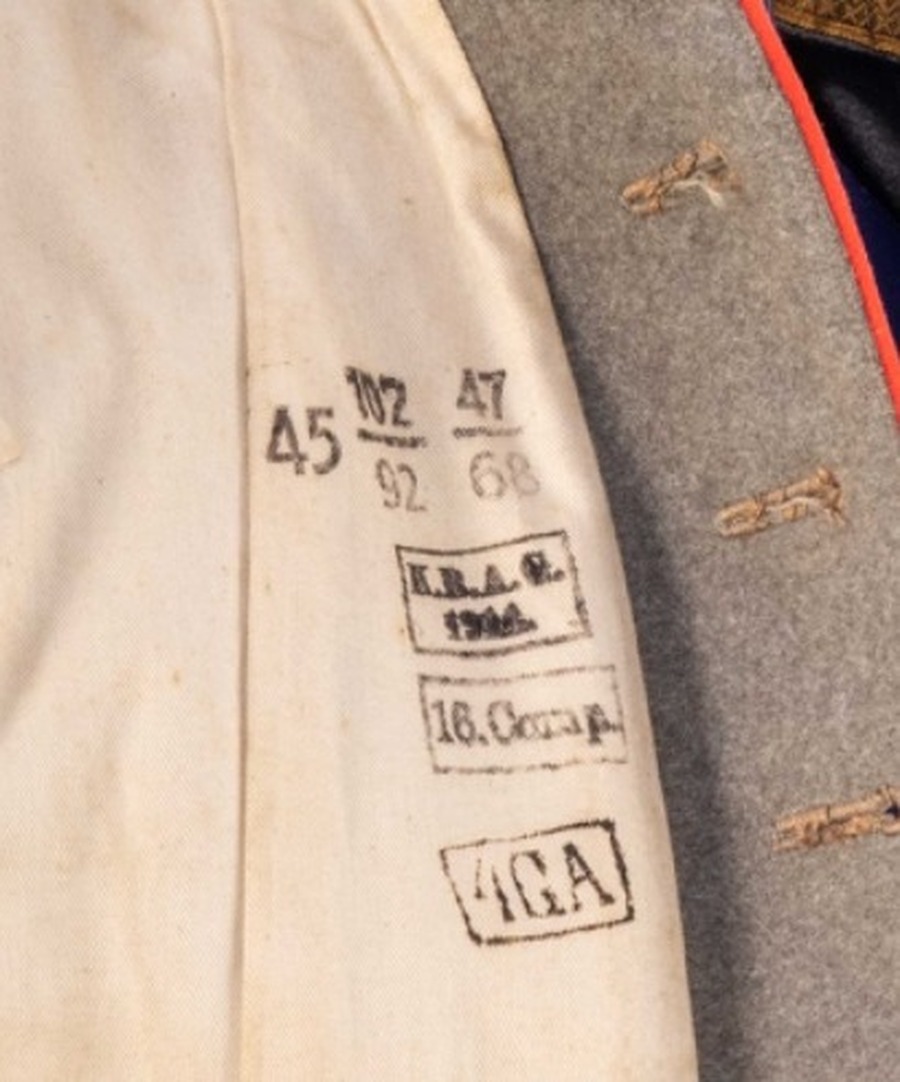
The tunic’s interior carries a cluster of ink stamps, photographed together below. In keeping with this catalog’s standard for uncertain readings, each is transcribed with its actual legibility rather than a confident-sounding guess:- Size/tailoring stamps: “45,” “102/92,” and “47/68” — clearly legible, consistent with German tunic sizing conventions recording torso length and chest/collar and sleeve measurements.
- “K.B.A.G. 1914” stamp: a boxed Fraktur-script stamp, legible in a sharper photograph made available after this entry’s initial cataloging, reading “K.B.A.G.” over the date 1914. This most plausibly abbreviates Kriegs-Bekleidungsamt Gardekorps — a wartime clothing depot the Guard Corps stood up to supply its units — consistent with this tunic’s Guard Corps regiment.[13] The reading is offered with appropriate caution: it is the most consistent interpretation of the letterforms and date now visible, but no independent archival record of this specific depot stamp on a 4. Garde-Feldartillerie-Regiment piece was located to confirm it beyond the stamp itself.
- “16. Comp.” stamp: reasonably legible as a company-level depot or issue marking (16th Company), though the exact parent unit of that company stamp is not independently established.
- “4.G.A.” stamp: clearly legible, and directly consistent with an abbreviation for “4. Garde-Artillerie” — the strongest single piece of physical evidence tying this tunic to the 4. Garde-Feldartillerie-Regiment, and corroborated by the shoulder-board grenade device discussed above.
Last edited:


