


HatEnjoyer
Well-known member
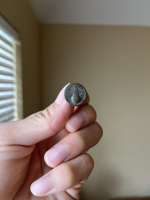
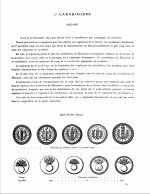
Here is another new acquisition of mine, a very rare pewter button worn by Napoleon's Carabinier à Cheval during the Napoleonic Wars.
Consisting of two regiments, the Carabiniers-à-Cheval were a heavy cavalry unit, well known for their post-1809 attire, which included a white uniform, knee-high boots, a brass-plated cuirass, and a crested brass helmet.
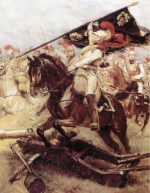
This specific button was dug near the Berezina River, indicating that it was lost during the 1812 Campaign, most known for the infamous retreat from Moscow. Like most French and French-aligned units during the 1812 Campaign, the 2 regiments of Mounted Carabiniers suffered greatly. At the opening of the campaign, many Carabiniers lost their horses to bad weather and lack of food, and were forced to find new mounts. Those who found new horses were lucky, as those who failed to procure new mounts were left to march on foot, often falling behind due to exhaustion and unsuitable footwear. The Mounted Carabiniers’ most significant action of the campaign came during the Battle of Borodino, during which they stormed a heavily contested earthwork called the Great Redoubt, sustaining heavy casualties.
During the retreat, hundreds of Mounted Carabiniers died due to exposure, battle, exhaustion, and starvation. In fact, many Carabiniers were forced to eat their own horses to curb the intense hunger felt by the remnants of the Grande Armée. By the time the army crossed the Berezina River into friendly territory, the Mounted Carabiniers regiments were but a husk of what they once were, with only about 200 men across both regiments managing to escape Russia. Of the 941-strong 1st Regiment, only 81 men survived the campaign.
Consisting of two regiments, the Carabiniers-à-Cheval were a heavy cavalry unit, well known for their post-1809 attire, which included a white uniform, knee-high boots, a brass-plated cuirass, and a crested brass helmet.
This specific button was dug near the Berezina River, indicating that it was lost during the 1812 Campaign, most known for the infamous retreat from Moscow. Like most French and French-aligned units during the 1812 Campaign, the 2 regiments of Mounted Carabiniers suffered greatly. At the opening of the campaign, many Carabiniers lost their horses to bad weather and lack of food, and were forced to find new mounts. Those who found new horses were lucky, as those who failed to procure new mounts were left to march on foot, often falling behind due to exhaustion and unsuitable footwear. The Mounted Carabiniers’ most significant action of the campaign came during the Battle of Borodino, during which they stormed a heavily contested earthwork called the Great Redoubt, sustaining heavy casualties.
During the retreat, hundreds of Mounted Carabiniers died due to exposure, battle, exhaustion, and starvation. In fact, many Carabiniers were forced to eat their own horses to curb the intense hunger felt by the remnants of the Grande Armée. By the time the army crossed the Berezina River into friendly territory, the Mounted Carabiniers regiments were but a husk of what they once were, with only about 200 men across both regiments managing to escape Russia. Of the 941-strong 1st Regiment, only 81 men survived the campaign.