

Sandmann
Well-known member
Dear fellow forum members,
I was just browsing through my books on uniforms and pickelhauben again and noticed that the book “Die Deutsche Artillerie” (The German Artillery) states that the chin strap for foot artillery was introduced as early as 1887.
According to the AKO of March 3, 1887, however, the M1887 helmet and chin strap was only introduced for the “infantry.”
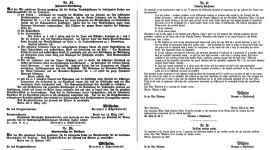
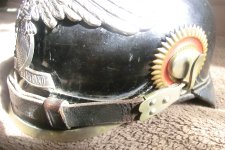
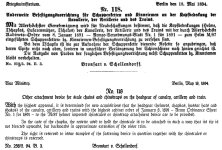
Furthermore, according to the AKOs, the chin strap wasn’t introduced for the artillery, cavalry, and Train before May 18, 1894.
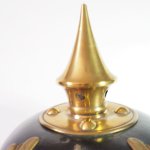
However, I have also seen photos in which pioneers are wearing the M1887 helmet. An introduction for the “infantry” could therefore also have meant that the chin strap was actually introduced for all foot troops in 1887. The clothing regulations of 1893 also indicate this, because according to them, the only difference between the helmet for the „infantry“ and the “foot artillery” at that time actually was the spike and the ball top. Nevertheless, this is somewhat relativized, as the text passage about the chin straps states: "Anstelle der Kinnriemen treten bei einzelnen Truppenteilen Schuppenketten aus flachen … Schuppen aus Messing“ (“Instead of chin straps, some units use flat ... brass chin scales”). The affected units won't be covered here any further and have been kept very general.
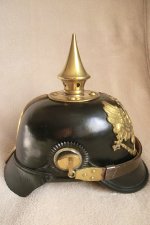
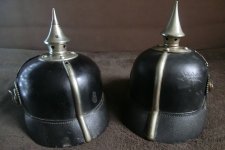
Well, I have never seen a M1887 or M1891 artillery helmet and would like to know what you think about this. Was the chin strap for foot artillery introduced in 1894, as described in the AKOs, or did foot artillerymen wear a chin strap before?
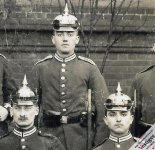
Do you by any chance have photos of a M1887 or M1891 foot artillery helmet? Or do you have photos of the period between 1887 and 1893 showing foot artillerymen and on which you can see if a chin strap was worn? I would be really interested to know if anyone has such photos or knows of any photos that clearly show it.
It would be great if you could share your opinions on this. Photographic evidences would be even better, of course. I look forward to reading your opinions and thank you in advance for your active participation in this discussion.
I was just browsing through my books on uniforms and pickelhauben again and noticed that the book “Die Deutsche Artillerie” (The German Artillery) states that the chin strap for foot artillery was introduced as early as 1887.
According to the AKO of March 3, 1887, however, the M1887 helmet and chin strap was only introduced for the “infantry.”
Furthermore, according to the AKOs, the chin strap wasn’t introduced for the artillery, cavalry, and Train before May 18, 1894.
However, I have also seen photos in which pioneers are wearing the M1887 helmet. An introduction for the “infantry” could therefore also have meant that the chin strap was actually introduced for all foot troops in 1887. The clothing regulations of 1893 also indicate this, because according to them, the only difference between the helmet for the „infantry“ and the “foot artillery” at that time actually was the spike and the ball top. Nevertheless, this is somewhat relativized, as the text passage about the chin straps states: "Anstelle der Kinnriemen treten bei einzelnen Truppenteilen Schuppenketten aus flachen … Schuppen aus Messing“ (“Instead of chin straps, some units use flat ... brass chin scales”). The affected units won't be covered here any further and have been kept very general.
Well, I have never seen a M1887 or M1891 artillery helmet and would like to know what you think about this. Was the chin strap for foot artillery introduced in 1894, as described in the AKOs, or did foot artillerymen wear a chin strap before?
Do you by any chance have photos of a M1887 or M1891 foot artillery helmet? Or do you have photos of the period between 1887 and 1893 showing foot artillerymen and on which you can see if a chin strap was worn? I would be really interested to know if anyone has such photos or knows of any photos that clearly show it.
It would be great if you could share your opinions on this. Photographic evidences would be even better, of course. I look forward to reading your opinions and thank you in advance for your active participation in this discussion.