mimikri camo s

gino1

Well-known member
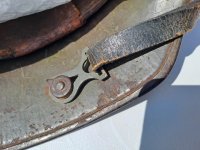
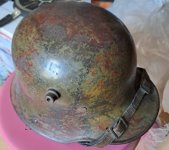
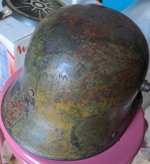
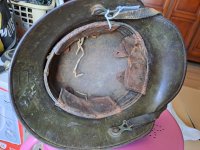
I’m not very familiar with these camouflage helmets; can anyone help me out with the details—what to look for and which model it is?

 

Attachments

  • 8f17a956-ae50-4566-a04c-38e56232b22f.jpg
    8f17a956-ae50-4566-a04c-38e56232b22f.jpg
    43 KB · Views: 61
  • efc2b05e-ae95-4b33-b682-ae59b62e372e.jpg
    efc2b05e-ae95-4b33-b682-ae59b62e372e.jpg
    48 KB · Views: 61
  • c2d3861d-3f72-4874-bdb9-4bdb9459f601.jpg
    c2d3861d-3f72-4874-bdb9-4bdb9459f601.jpg
    85 KB · Views: 57
  • 7ef43596-e543-4497-8dd5-101fdec6f7f5.jpg
    7ef43596-e543-4497-8dd5-101fdec6f7f5.jpg
    268.4 KB · Views: 61
G. - Gebrüder Gnüchtel A.G., Lauter i./Sa. who only made size 62.

Here is a good page to bookmark,

 
Indeed a nice helmet with a later spliced double spliced liner. Would have been a stunner when originally first painted.
 
Chinstrap is worth $200 Plus . Looks like someone went mad with a polishing cloth on it which is a shame. Rob
 
I have learned a lot about camo helmets on this forum. They fascinate me as the patterns were inspired by observations by artists engaged in "cubism" and the abstract through painting on the eye and mind. Here's an added dimension of complexity that Mark Felton just researched and featured.
 
It may be true that there are many doughboy and Disney painted German Steel helmets floating around and in collections, but experienced collectors can generally spot them when compared with a German painted period example. And similarly, there are many original examples. Check out Oliver Lock’s book Stahlschutzhelme where there are plenty of period images of camo helmets. And there are examples of of blood damaged German WW1 camo’s in collections, so this puts to bed the theory that they may not have been used on the battlefield. Many of the helmets in the video looked off to me, and the one in the thumb nail is a doughboy painted example and is also featured in Oliver Locks book.
 
I have learned a lot about camo helmets on this forum. They fascinate me as the patterns were inspired by observations by artists engaged in "cubism" and the abstract through painting on the eye and mind. Here's an added dimension of complexity that Mark Felton just researched and featured.


I’m not sure what Felton researched as this is common knowledge amongst Stahlelm collectors already. He just made a video about what we already know.
 
Back
Top