Original or copy

Kaisersammler

Well-known member
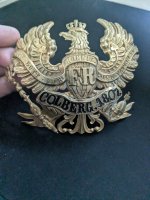
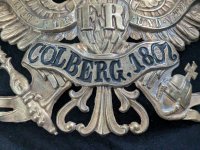
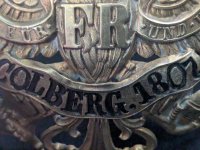
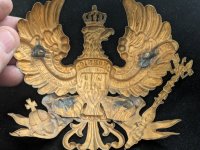
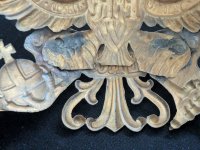
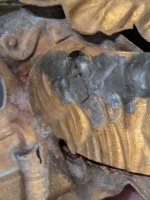
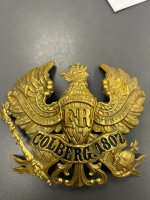
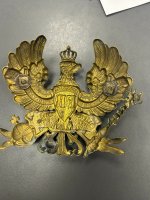
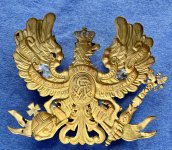
What do you think of the coat of arms? It looks like two coats of arms were combined.
 

Attachments

  • PXL_20251107_122740620.jpg
    PXL_20251107_122740620.jpg
    2.3 MB · Views: 60
  • PXL_20251107_122754113.jpg
    PXL_20251107_122754113.jpg
    1.9 MB · Views: 57
  • PXL_20251107_122804724.jpg
    PXL_20251107_122804724.jpg
    1.4 MB · Views: 57
  • PXL_20251107_122811705.jpg
    PXL_20251107_122811705.jpg
    1.5 MB · Views: 66
  • PXL_20251107_122818707.jpg
    PXL_20251107_122818707.jpg
    1.7 MB · Views: 60
  • PXL_20251107_122843878.jpg
    PXL_20251107_122843878.jpg
    1.5 MB · Views: 50
  • PXL_20251107_122850633.jpg
    PXL_20251107_122850633.jpg
    1.4 MB · Views: 47
  • PXL_20251107_122856747.jpg
    PXL_20251107_122856747.jpg
    1.9 MB · Views: 59
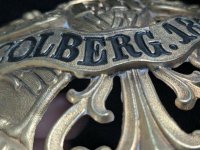
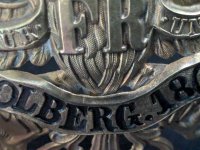
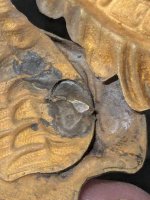
The soldering was indeed done in the style of the period, but a manufacturer of an officer’s helmet at the time would likely have had a proper heraldic eagle in stock or would have been able to procure one.
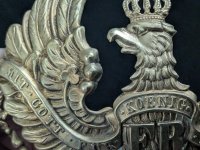
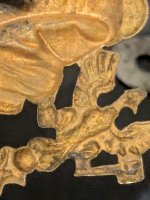
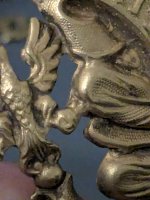
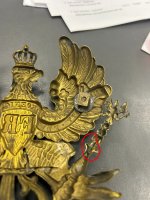
However, it’s not badly done. Where exactly is the solder joint on the scepter? There must be a split somewhere, because the connection points at the wing and the claw look original, even though they are two separate pieces?!
 
Thank you for your efforts. It's strange that there's no solder joint on the scepter. My profession is in the metalworking industry, but I don't quite understand this.
Close-up photos of the solder joints again.

I think there were many unexplained parts. I'm thinking it was the end of the war when all available materials were used. Just a thought.
 

Attachments

  • PXL_20251107_171547174.jpg
    PXL_20251107_171547174.jpg
    771.8 KB · Views: 22
  • PXL_20251107_171531472.jpg
    PXL_20251107_171531472.jpg
    907.9 KB · Views: 23
  • PXL_20251107_171513292.jpg
    PXL_20251107_171513292.jpg
    847.9 KB · Views: 20
  • PXL_20251107_171500788.jpg
    PXL_20251107_171500788.jpg
    780.7 KB · Views: 23
It is interesting too that the patina of the two parts looks the same - so together for a very long time I would think.
 
Nice original plate. I have the same. Mine looks like soldered with brass, not tin. Your scepter is splitted on the same place like mine. See on my image.
 

Attachments

  • IMG_3131.jpg
    IMG_3131.jpg
    2.2 MB · Views: 44
  • IMG_3132.jpg
    IMG_3132.jpg
    2.6 MB · Views: 40
  • IMG_3134_1.jpg
    IMG_3134_1.jpg
    1.8 MB · Views: 40
Always great to learn something new. The quality of the rework is really good (y)
But I wonder why they did the rework like that instead of taking a complete new eagle. To avoid double holes in the helmet? Are there other advantages that I don't see?
 
Always great to learn something new. The quality of the rework is really good (y)
But I wonder why they did the rework like that instead of taking a complete new eagle. To avoid double holes in the helmet? Are there other advantages that I don't see?
I don’t think is rework, perhaps workshop techonology. As example have seen plates of 9 dragoon only with soldrered head under bandoo Waterloo. Or colberg grendier plate like here -> https://www.pickelhaubes.com/xf/threads/9th-grenadier-model-1867-officer.11419/
 
I don’t think is rework, perhaps workshop techonology. As example have seen plates of 9 dragoon only with soldrered head under bandoo Waterloo. Or colberg grendier plate like here -> https://www.pickelhaubes.com/xf/threads/9th-grenadier-model-1867-officer.11419/
But what is the advantage of such a common working method? If you use the lower half of a „Colberg“ emblem, you first need a complete emblem of it. Then you have to cut it in half and solder it together with a line eagle that has also been cut in half. That are extra steps that I can't imagine that as a common practice. Why don’t take the complete „Colberg“ eagle and replace the line eagle? I can only imagine it being an exception if …
  • …several emblems were damaged and only a part of them could be used.
  • Or that you don't want to have double holes in your helmet if you have received permission to wear a "Colberg" banner after buying a helmet with line eagle.
I'm aware that tolerance for repairs to brand-new items was higher back then than it is in today's throwaway society. But introducing this procedure as a standard wouldn't have made much sense in my eyes. That's why I asked if there are any other advantages of such a way of working that I'm virtually blind to?
 
In my eyes these look original, but what surprises me is the finish. With the voided crown I would say these are officer's Wappen, but the finish looks more like other ranks, painted rather than gilded. The process also seems more fitting for a Kammer item than a private purchase item.
If the scroll required wider legs then the process makes good sense, much easier to solder on a bottom part than to rehole a pickelhaube and solder on a scroll as well.
Regards, Lars
 
But what is the advantage of such a common working method? If you use the lower half of a „Colberg“ emblem, you first need a complete emblem of it. Then you have to cut it in half and solder it together with a line eagle that has also been cut in half. That are extra steps that I can't imagine that as a common practice. Why don’t take the complete „Colberg“ eagle and replace the line eagle? I can only imagine it being an exception if …
  • …several emblems were damaged and only a part of them could be used.
  • Or that you don't want to have double holes in your helmet if you have received permission to wear a "Colberg" banner after buying a helmet with line eagle.
I'm aware that tolerance for repairs to brand-new items was higher back then than it is in today's throwaway society. But introducing this procedure as a standard wouldn't have made much sense in my eyes. That's why I asked if there are any other advantages of such a way of working that I'm virtually blind to?
As a reason maybe that it was impossible to create a high-quality, relief imprint of the plate in one piece (for example, the metal would tear or become too thin)
 
As a reason maybe that it was impossible to create a high-quality, relief imprint of the plate in one piece (for example, the metal would tear or become too thin)
You mean that a high rejection rate could be the reason to at least partially reduce the material loss? I think they would have chosen another production method in that case, like this. It would have been more economical due to the lower amount of material waste.
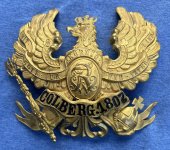
IMG_0168.jpegIMG_0169.jpeg
The photos are from Brian and were posted here: https://www.pickelhaubes.com/xf/threads/colberg-officer-1807.19801/

However, when I looked at Brian's helmet eagle, another reason came to mind, that would make sense. Here, the Colberg banner was attached to an old grenadier eagle. So if the manufacturer only had a mold for a Colberg eagle with an FWR on its chest as a tool, it would have made sense to cut off the lower part if a Colberg eagle with an FR on the chest was rarely needed. Press molds were and still are very expensive to produce. If they were only rarely needed, this way of working would make sense.
 
PS: Reiner und Leone, would you please add photos of your helmet eagles to this post about Colberg officer emblems? I think it would be great to have as many different styles of helmet eagles as possible together.
Link: Colberg 1807 officer emblems
 
Dear all, I may be wrong, but shouldn't the eagle be a Grenadier eagle "alter Art" anyway ?
Like the one in Sandy's post...
On grenadier rgmt should be grenadier eagle with FRW, on some field artillery rgmts and one foot with FR. And one guard foot artillery company had guard eagle with colberg bandeau too
 
Back
Top