Split Visor Trim

b.loree

Administrator
Staff member
I know we have some members here who have had a lot of experience in metal working and soldering. Is it possible to solder broken pieces of brass visor trim back together?? I am working on a Wurttemberg officer helmet which unfortunately has it's squared brass visor trim broken at one corner. This is a common problem with pickelhauben, and yes, the repair would be visible but.....Can this be fixed?
 
The trick to soldering is to have super clean joints. I mask off the trim with exception of about one inch on the inside of the two halves. I use my glass bead cabinet and give one quick blast to that un masked area. I then brush flux on the area to be soldered. Preparatory to this I snip a one inch x one half inch piece of similar or thinner brass, bend it over itself making it one inch x one quarter inch. I open up the bend with a flat screw driver. I blast clean and flux the patch I just made only on the outer surface. Then insert the blind patch in the two pieces of trim. You need to get creative and clamp the pieces in place. Warm it with a propane torch and flow solder between the patch and the trim. If you keep the flux on only the bonding area it will flow only where needed. Usually I lightly sand and polish the outside joint. If you don’t have a bead cabinet, sand the areas as clean as possible and wash off with acetone.
Ron
 
An interesting technique,

Can you share an example of the finished product? Picture is worth a thousand words.
 
Id like to see once you have it repaired. On delicate items i used a jeweler friend but he recently and unexpectedly passed away
 
Thanks Ron, one further question.....adding that thin piece of brass to the inside of the trim is obviously going to effect getting the trim back on to the leather visor. How do you deal with this? Maybe sand down the visor where the new joint is? Anyway, I will try your method on a couple of broken pieces that I own not this customers'. As to getting a jeweller to do this, where I live, they do not want solder anywhere near their work space, at least that is what I was told. Thank you again. B
 
Good luck Brian! I have the same problem with Jewlers in my area, went to around 6 or 7 of them, all said no as they do not want solder around....

James
 
Brian,

The brass sheet stock I use measures .015” or .38mm. I’m sure that is a gage number but not sure off hand. I ordered it from McMaster Carr in the U.S. If I recall, at the time they had both yellow and red brass in stock in several thicknesses. I have repaired 2 visor trims this way and the splice patch thickness did not cause a problem in inserting the leather nor was it visually evident when assembled. I do open up the trim slightly before inserting the leather so that I am not forcing the leather into the groove. If the trim break is only on one side, and not broken completely thru, I would only solder a flat patch in place behind the break. I will try to find an example this evening and post a photo.
 
  • Like
Reactions: ccj
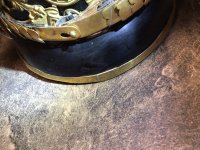
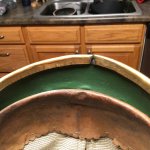
Photos of the last one I repaired. While looking at my helmets for an example, I realize I have 2 other helmets with split trim that need soldered. The second photo shows the interior side of the repair. A v section was missing in the brass, so the gray is the solder showing on the surface of the inserted patch.
 

Attachments

  • IMG_0057.jpeg
    IMG_0057.jpeg
    1.9 MB · Views: 26
  • IMG_0058.jpeg
    IMG_0058.jpeg
    1.1 MB · Views: 27
Good luck Brian! I have the same problem with Jewlers in my area, went to around 6 or 7 of them, all said no as they do not want solder around....

James
Interesting. I assume this is because of the lead content in traditional tin/lead solder.?

Soldering in the commercial world is now done using Lead free ROHS compliant solder. Does the same job but requires a higher temperature to reach the melting point.
 
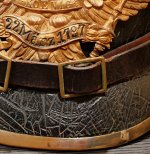
I had a split visor trim re-soldered on a M95 helmet. The repair is visible but in my opinion very acceptable since the helmet (a true attic find) is in good but far from pristine condition. This is a high magnification but in real life you hardly notice it.

G1120608.JPG
 
Back
Top