

RoyalScotsVols
Well-known member
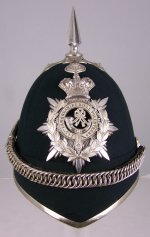
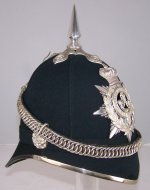
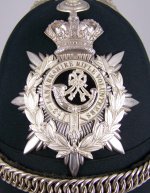
The 3rd Lanarkshire Rifle Volunteers (3rd LRV) were a remarkable regiment based in the south side of Glasgow. They were noted for their skill in shooting, twice having won Britain’s greatest trophy for marksmanship, The Queen’s Prize at Bisley (the national shooting ground in Surrey, England) and also for having set up a football club (known as ‘soccer’ in some other countries) which bore the units name, winning the football league and twice winning the Football Association (FA) Cup. Shown below is an officers helmet worn from 1878 to circa 1902 named inside to Henry Burnham:
The regiment’s story began with the great French invasion scare of 1859 which - although the risk was rather overhyped – led to a national wave of public enthusiasm to create units of ‘Rifle Volunteers’ which were to provide local defence should the French have dared to cross the English Channel.
The roots of what would become the 3rd LRV were the surviving members of the previous Glasgow Light Horse (GLH) of 1796, the volunteers of 1803 and the Sharpshooters of 1819. One of the only two survivors from the GLH was a Mr. Robert Reid who was 88 years of age! This venerable group were titled the ‘78th Lanark’ although they styled themselves as the ‘Old Guard of Glasgow’. These stalwart gentlemen do not seem to have ever appeared in uniform nor to have done any drill but they set an example to the younger generation and apparently showed them 'how it should be done'!
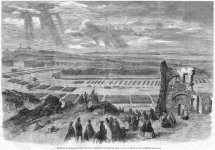
Eight volunteer corps each of approximately company strength were raised locally in 1859, recruited either from the area, local employers or temperance societies. The first public appearance of any Scottish volunteers was on 14 October 1859, when volunteers from the South Glasgow Corps collectively provided Queen Victoria with a guard of honour at the opening of Glasgow’s new water works at Loch Katrine. On 7th August 1860 they took part in the Royal Review in Edinburgh, again before Queen Victoria, with 730 men of the corps being present. A total of 21,514 Scottish volunteers paraded in front of 200,000 spectators in the area of Arthur’s Seat (the extinct volcano in the centre of Edinburgh) behind Holyrood Palace (the royal residence in Edinburgh). The illustration below from the London Illustrated News demonstrates the scale of this event:
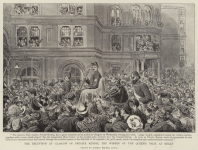
The following day on 8th August 1860, the South Glasgow corps were incorporated together to become the 3rd Lanarkshire Rifle Volunteers. The unit quickly became known as excellent shots culminating in two members winning the highest accolade in marksmanship, the Queen’s Prize at the National Rifle Association meeting at Bisley; Private Malcolm Rennie in 1894 and Lieutenant David Yates in 1898 with Private Boyd having tied for the title in 1895. The Queen’s Prize is the ultimate sporting accolade for a marksman and Private Rennie’s win was widely reported. He returned to Glasgow to a hero’s welcome, being carried in a chair from Central Station to the Drill Hall through a thronging crowd as shown in the newspaper illustration below:
In addition to Private Rennie’s win, the 3rd LRV won second and fourth place, and placed nine men in the Queen’s Hundred which was a massive achievement. All the more remarkable when Lt Yates won it again four years later - he too returned to Glasgow to a hero’s welcome.
In 1881 the regiment was affiliated to the newly formed Cameronians (Scottish Rifles) regiment as part of the Army reforms but it kept its own identity. During the Second Boer War, 98 members of the regiment volunteered for active service. The regiment was finally renamed the 7th Battalion of the Cameronians in 1908 before going on to serve with distinction in the First World War.
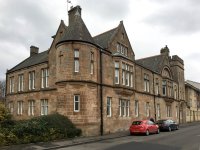
The regiment’s magnificent drill hall on Coplaw Street in Glasgow was completed in 1885 designed by John Wilson, an Architect who was also a member of the unit. This building still exists today, albeit it has now been converted to residential apartments, and is shown below:
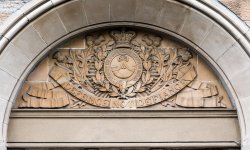
The regiment was only renamed the 7th Battalion of the Cameronians (Scottish Rifles) in 1908, so the crest at the Drill Hall must have been a later alteration or addition.
The Third Lanark Rifle Volunteers Football Club
The first ever international football match, Scotland v England, was played at the West of Scotland Cricket Ground in Partick, Glasgow on St Andrew’s Day in 1872. Watched by 4,000 spectators, the game finished in a 0-0 draw. The match was organised by Queen’s Park FC who provided the entire Scottish team, although several of the players, such as Billy Dickson, Joseph Taylor and William McKinnon were also members of the 3rd LRV.
Inspired by the match, the regiment decided to set up its own football team twelve days later. The Third Lanark Rifle Volunteers Football Club was born on 12th December 1872 with the support of Lieutenant Colonel Ewing (the Commanding Officer at that time), the majority of the officers and 25 of the enlisted men. John Wilson, who later became the Architect designing their new Drill Hall, served in the unit and became the team’s striker, scoring the Third Lanark’s first ever league goal!
In 1875 the club set up at Old Cathkin Park adjacent to the regiment’s drill ground. A grandstand was built, and a Scotland v England international was played there in 1884 with Scotland winning 1-0, watched by a crowd of 10,000.
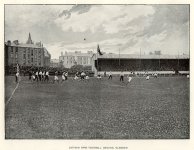
As a football team, the regiment fared surprisingly well. They won the FA Cup twice, scoring notable victories over both Celtic (1889) and Rangers (1905), as well as winning the football league in 1904.
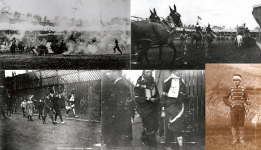
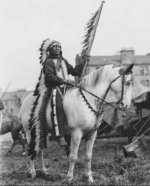
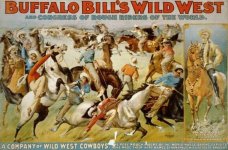
One of the world’s first black footballers, Robert Walker, played for the team and he was the first to play in a major competition, the Scottish Cup Final of 1876. If football wasn’t spectacle enough, the regiment’s parade ground also hosted Buffalo Bill’s Wild West touring show for 6 days in 1904:
The football club finally severed its ties to the regiment in 1903, when it became Third Lanark Athletic Club moving to a new location named New Cathkin Park where they stayed until their demise under dubious financial circumstances in 1967.
The regiment’s story began with the great French invasion scare of 1859 which - although the risk was rather overhyped – led to a national wave of public enthusiasm to create units of ‘Rifle Volunteers’ which were to provide local defence should the French have dared to cross the English Channel.
The roots of what would become the 3rd LRV were the surviving members of the previous Glasgow Light Horse (GLH) of 1796, the volunteers of 1803 and the Sharpshooters of 1819. One of the only two survivors from the GLH was a Mr. Robert Reid who was 88 years of age! This venerable group were titled the ‘78th Lanark’ although they styled themselves as the ‘Old Guard of Glasgow’. These stalwart gentlemen do not seem to have ever appeared in uniform nor to have done any drill but they set an example to the younger generation and apparently showed them 'how it should be done'!
Eight volunteer corps each of approximately company strength were raised locally in 1859, recruited either from the area, local employers or temperance societies. The first public appearance of any Scottish volunteers was on 14 October 1859, when volunteers from the South Glasgow Corps collectively provided Queen Victoria with a guard of honour at the opening of Glasgow’s new water works at Loch Katrine. On 7th August 1860 they took part in the Royal Review in Edinburgh, again before Queen Victoria, with 730 men of the corps being present. A total of 21,514 Scottish volunteers paraded in front of 200,000 spectators in the area of Arthur’s Seat (the extinct volcano in the centre of Edinburgh) behind Holyrood Palace (the royal residence in Edinburgh). The illustration below from the London Illustrated News demonstrates the scale of this event:
The following day on 8th August 1860, the South Glasgow corps were incorporated together to become the 3rd Lanarkshire Rifle Volunteers. The unit quickly became known as excellent shots culminating in two members winning the highest accolade in marksmanship, the Queen’s Prize at the National Rifle Association meeting at Bisley; Private Malcolm Rennie in 1894 and Lieutenant David Yates in 1898 with Private Boyd having tied for the title in 1895. The Queen’s Prize is the ultimate sporting accolade for a marksman and Private Rennie’s win was widely reported. He returned to Glasgow to a hero’s welcome, being carried in a chair from Central Station to the Drill Hall through a thronging crowd as shown in the newspaper illustration below:
In addition to Private Rennie’s win, the 3rd LRV won second and fourth place, and placed nine men in the Queen’s Hundred which was a massive achievement. All the more remarkable when Lt Yates won it again four years later - he too returned to Glasgow to a hero’s welcome.
In 1881 the regiment was affiliated to the newly formed Cameronians (Scottish Rifles) regiment as part of the Army reforms but it kept its own identity. During the Second Boer War, 98 members of the regiment volunteered for active service. The regiment was finally renamed the 7th Battalion of the Cameronians in 1908 before going on to serve with distinction in the First World War.
The regiment’s magnificent drill hall on Coplaw Street in Glasgow was completed in 1885 designed by John Wilson, an Architect who was also a member of the unit. This building still exists today, albeit it has now been converted to residential apartments, and is shown below:
The regiment was only renamed the 7th Battalion of the Cameronians (Scottish Rifles) in 1908, so the crest at the Drill Hall must have been a later alteration or addition.
The Third Lanark Rifle Volunteers Football Club
The first ever international football match, Scotland v England, was played at the West of Scotland Cricket Ground in Partick, Glasgow on St Andrew’s Day in 1872. Watched by 4,000 spectators, the game finished in a 0-0 draw. The match was organised by Queen’s Park FC who provided the entire Scottish team, although several of the players, such as Billy Dickson, Joseph Taylor and William McKinnon were also members of the 3rd LRV.
Inspired by the match, the regiment decided to set up its own football team twelve days later. The Third Lanark Rifle Volunteers Football Club was born on 12th December 1872 with the support of Lieutenant Colonel Ewing (the Commanding Officer at that time), the majority of the officers and 25 of the enlisted men. John Wilson, who later became the Architect designing their new Drill Hall, served in the unit and became the team’s striker, scoring the Third Lanark’s first ever league goal!
In 1875 the club set up at Old Cathkin Park adjacent to the regiment’s drill ground. A grandstand was built, and a Scotland v England international was played there in 1884 with Scotland winning 1-0, watched by a crowd of 10,000.
As a football team, the regiment fared surprisingly well. They won the FA Cup twice, scoring notable victories over both Celtic (1889) and Rangers (1905), as well as winning the football league in 1904.
One of the world’s first black footballers, Robert Walker, played for the team and he was the first to play in a major competition, the Scottish Cup Final of 1876. If football wasn’t spectacle enough, the regiment’s parade ground also hosted Buffalo Bill’s Wild West touring show for 6 days in 1904:
The football club finally severed its ties to the regiment in 1903, when it became Third Lanark Athletic Club moving to a new location named New Cathkin Park where they stayed until their demise under dubious financial circumstances in 1967.