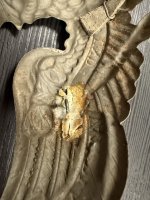
As Wojtek says, the 2 surfaces being soldered must be perfectly clean for the solder to flow and bond where they need to be. I mask off the small focused area to be soldered with masking tape and give them a quick blast with glass beads in my blast cabinet. You can get by with using a Dremel tool and small round wire brush also. The next step is to brush a small amount of flux paste to the 2 surfaces before heating. The flux etches the areas and the solder will flow to this area. Many people here suggest to only use a soldering iron or gun fearing discoloration. I use a propane torch with a small adjustable tip and keep the heat low and apply it in brief focused successions while holding the solder near the area to be soldered and rarely have discoloration. When the temperature is right, the solder will liquify and flow to the focused area. Let cool for a few seconds without moving the 2 components and you are done. Obviously, the thicker the items being soldered, the longer it takes to reach adequate temperature. Make sure to scrub the finished joint with soap and water to neutralize the flux.
I also use adjustable arm alligator clamp fixtures to maintain position of the 2 items being soldered. Otherwise you need a helper to hold the pieces with pliers, etc. My wife used to be my helper, but the clamps never ask if I’m done yet. Soldering steel items is a bit harder, but the same principals apply. If your attempt does not work, start from the beginning and re-clean everything and try again.
Ron