How to restore this one...

Milly

New member
Hello dear all,

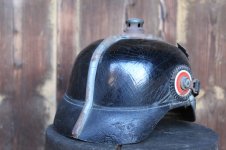
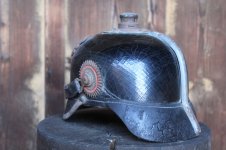
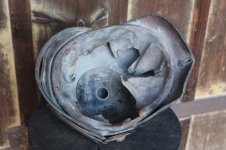
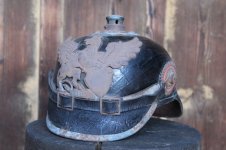
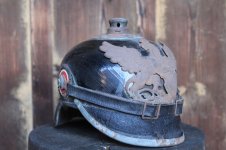
I got this Baden M15, and wanted to have your opinions on if and how to clean it... 😊

 

Attachments

  • IMG-20260301-WA0004.jpg
    IMG-20260301-WA0004.jpg
    237.7 KB · Views: 40
  • IMG-20260301-WA0005(1).jpg
    IMG-20260301-WA0005(1).jpg
    224 KB · Views: 38
  • IMG-20260301-WA0006.jpg
    IMG-20260301-WA0006.jpg
    253.5 KB · Views: 35
  • IMG-20260301-WA0008.jpg
    IMG-20260301-WA0008.jpg
    249.8 KB · Views: 36
  • IMG-20260301-WA0009.jpg
    IMG-20260301-WA0009.jpg
    267.3 KB · Views: 39
You will hear many opinions on cleaning (or not) Pickelhaubes from many members on the forum. Some like to only do a light dusting and others will go towards a full restoration. It all depends on how original you wish to keep it.

I think it has a certain character just how it is and would leave the outside alone and very carefully clean the inside of the front and back peaks and the inside itself. But even that is tricky and risks damaging the delicate liner.

In the end it's up to you and I am sure a few will chime in on how best to clean or restore if you do decide to do so.

Gook luck - it's a nice helmet and I really like it.

Peter
 
I leave everything as it is from the purchase; I view it as an old car with new paint on it, which isn't really pretty either. They are already 100 years old and even older, so I'm not going to make them new. I consider it nostalgia.
 
Like Peter,
I advise you not to touch the outside. Just clean the liner with a small damp sponge and a little black soap or glycerin soap. Afterwards, it's good to condition the leather of the liner by gently applying glycerin. Glycerin is neutral, non-greasy, transparent, and doesn't stain. It looks like clear honey; simply add 30% water to make a syrup and brush it onto the leather of the liner. You can do the same with the chin strap. The water will evaporate, leaving only the glycerin.
 
Last edited:
There are several reasons why you shouldn't clean the metal on this item. This shouldn't be done on a 1916 Pickelhaube.Theoretically it can be cleaned and a new feldgrau paint applied.Only the paint must be lead-based, which is banned in Europe.You can age such paint by applying NaOH + H2O and then heating the item.I just don't really see the point of this job.
 
I recommend not to apply anything to the leather, either inside or out. It might give a short-term improvement, but in the long run it severely damages the leather and makes it rock-hard. The chinstrap seems to have been treated with something in the past, and has warped (and I guess hardened?) accordingly.
I know some members have experience with removing rust without affecting the remaining paint (Evaporust?), I would probably consider that as it would improve the look of the helmet without damaging its authenticity. Repainting would destroy its authenticity imo.
Regardless of what you decide to do, please share the results here :)
 
It's like shoes. You absolutely must take care of the leather. I'm not talking about the shell. However, the straps, backpack straps, chin straps, and helmet liners need to be maintained. Dry leather breaks like glass. Moisturized and softened with glycerin, it will last a lifetime. Chin straps I treated with glycerin 30 years ago are still just as supple, and I can adjust them with sliders without breaking them.
 
Hello, to make the leather supple I use osepoot oil (sorry for my English). This oil was used by the Gendarmerie, where they used to want to keep their horse leather supple. You can get it wherever they have old horse equipment; it is a bit hard to get here, but I still got a jar from an old gendarme
 
If one did want to remove the rust on M15 fittings, it can be done with Evaporust BUT it must be applied carefully and slowly. This chemical product will remove the original grey paint if left on too long. So the methodology is to apply it to a small area, using a Q tip leave it on for approx. 60 seconds then quickly wash off. Repeat until you have removed the "red" oxidization, then leave it and move on to another area. Once the job is complete.....to prevent the return of oxidization wipe on a very light coat of vaseline or some other light oil....apply with a cloth then wipe it off. Do not apply to the inside surface of the wappen which is in contact with the shell. With the red rust removed, the cleaned area wiill have the look of old steel which will blend in much better with the remaining paint. Again, this is the method but you decide whether to proceed. Another option could be to just wipe the fittings with a lightly oiled cloth, then dry with paper towel. This will remove the red rust colour. Once again this is your helmet and you are now in charge of looking after it.
 
Hello, to make the leather supple I use osepoot oil (sorry for my English). This oil was used by the Gendarmerie, where they used to want to keep their horse leather supple. You can get it wherever they have old horse equipment; it is a bit hard to get here, but I still got a jar from an old gendarme
A long time ago, I used Sapo (for riding leather), neatsfoot oil, or something similar. The downside is that it makes your hands greasy and stains your clothes. Also, if your room isn't well ventilated, you'll notice mold stains. That's why I prefer glycerin.

The same goes for iron and rust: never use varnish, oil, or grease. Use parquet wax (white beeswax). Brush it on, let it dry, and it will harden. Remove any residue with a wool cloth, and it will shine, be protected, and you won't get wax all over your hands when handling a blade or sheath.
In France, everyone who has followed these two products has adopted them without reservation.
 
A wax product, great! I knew I was on shaky ground suggesting a petroleum product but couldn’t remember an alternative, thanks! I also wonder what happens when this rust is left to continue, which was suggested in the first responses here.?? Do we have a rust expert here on the forum? 😊
 
I know how folks feel one way or the other about clean or not to clean. I believe that one should attempt to preserve the helmet for prosperity and take the middle of the road approach.

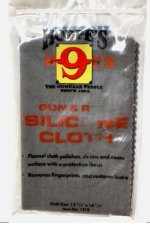
In the case with the pickelhaube’s rusted metal hardware silicone cloths, such as Allen’s Silicone Cleaning Cloths, a cleaning product for guns, knives and fishing reals. I have used these cloths on US and German WWI helmets, trench art, knives as well as rusted field gear. I figured that if is removes dust, dirt, and corrosive chemicals from weapons that have been fired it should be good enough for period helmets and field gear. Note in the case of weapons that have been fired, one should clean the firearm in the normal manner before wiping it down. The Silicone on the cloths remove rust, dust and oils from the user’s hands from the metal surface. It does it without removing the patina or finish that comes with age and provide an inhibitor of the rust returning and moisture of the surface.

Note I would not use it on leather portion of the helmet. My final piece of advice, try the cloth on a small area of the metal that is to be clean to see if you like the finish.

Good luck and let us know.
 
I know how folks feel one way or the other about clean or not to clean. I believe that one should attempt to preserve the helmet for prosperity and take the middle of the road approach.

In the case with the pickelhaube’s rusted metal hardware silicone cloths, such as Allen’s Silicone Cleaning Cloths, a cleaning product for guns, knives and fishing reals. I have used these cloths on US and German WWI helmets, trench art, knives as well as rusted field gear. I figured that if is removes dust, dirt, and corrosive chemicals from weapons that have been fired it should be good enough for period helmets and field gear. Note in the case of weapons that have been fired, one should clean the firearm in the normal manner before wiping it down. The Silicone on the cloths remove rust, dust and oils from the user’s hands from the metal surface. It does it without removing the patina or finish that comes with age and provide an inhibitor of the rust returning and moisture of the surface.

Note I would not use it on leather portion of the helmet. My final piece of advice, try the cloth on a small area of the metal that is to be clean to see if you like the finish.

Good luck and let us know.
agree with John, I have used silicone gun rags for years on metal parts! They are also inexpensive and last a long time if you keep them zipped up when not in use.

James
 
Excellent advice, I will look for this product.To my thinking, if nothing is done the rust would just keep eating away at the metal.
 
here is the one I buy, but there are other brands, run about $10

James
 

Attachments

  • Picture1.jpg
    Picture1.jpg
    147.2 KB · Views: 12
Back
Top