


HatEnjoyer
Well-known member
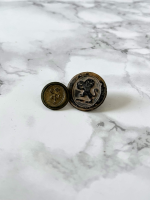
One of my latest acquisitions: a coat-sized British East India Company general service button from the late 1700s ~ early 1800s (pictured on the right-hand side). This specific example was excavated in China and purchased from an antique vendor in Nanping, Fujian Province.
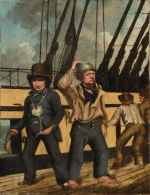
The period during which these buttons were produced saw Great Britain embroiled in the French Revolutionary Wars (1792-1802) and Napoleonic Wars (1803-1815). With her economy overstretched under wartime stress, Britain began to depend heavily on trade in the Far East to keep the nation afloat. Because of this growing dependency on East India Company convoys, the French Navy began dispatching task forces to disrupt British trade in the region. Several engagements between East Indiamen - that is, EIC cargo ships - and French warships occurred throughout this period, including skirmishes such as The Battle of Pulo Aura (14 February 1804) and The Action of 31 May 1809.
Due to the impressment of British sailors from the East India Company into the Royal Navy, many East Indiaman crews consisted of foreign sailors from India, Portugal, and even China. These sailors were poorly trained and lacked discipline, which occasionally proved detrimental, as in the case of the Streatham and Europe, which were captured by the French frigate La Caroline during the Action of 31 May 1809.
The period during which these buttons were produced saw Great Britain embroiled in the French Revolutionary Wars (1792-1802) and Napoleonic Wars (1803-1815). With her economy overstretched under wartime stress, Britain began to depend heavily on trade in the Far East to keep the nation afloat. Because of this growing dependency on East India Company convoys, the French Navy began dispatching task forces to disrupt British trade in the region. Several engagements between East Indiamen - that is, EIC cargo ships - and French warships occurred throughout this period, including skirmishes such as The Battle of Pulo Aura (14 February 1804) and The Action of 31 May 1809.
Due to the impressment of British sailors from the East India Company into the Royal Navy, many East Indiaman crews consisted of foreign sailors from India, Portugal, and even China. These sailors were poorly trained and lacked discipline, which occasionally proved detrimental, as in the case of the Streatham and Europe, which were captured by the French frigate La Caroline during the Action of 31 May 1809.


 ) Napoleon's navy! If ya'll would like to see some of the period documents, I was able to dig up, I'd be happy to share!