Question on Wilhelm II's personal epaulettes for the Garde du Korps

Verbofaber

New member
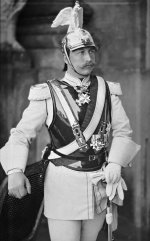
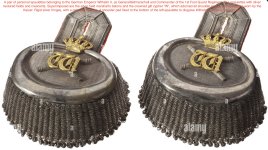
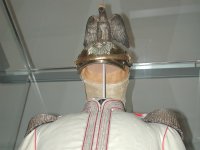
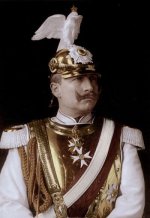
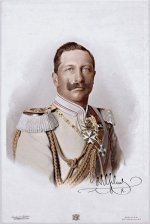
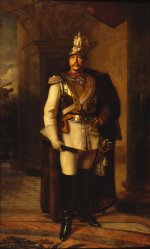
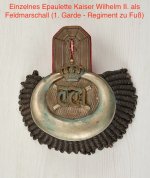
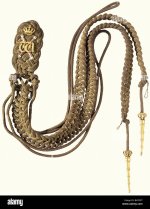
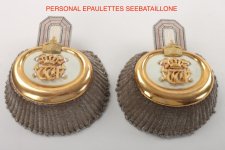
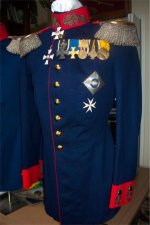
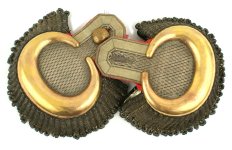
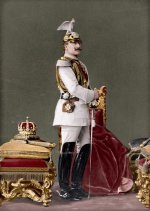
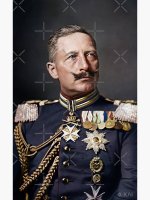
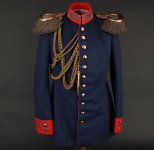
Hello, I'm trying to reconstruct Wilhelm II's personal epaulettes for the Garde du korps.Below on the tunic is his uniform with shorter left sleeve. Is this the right type, as I have seen some colorizations where the metal crescent on top of the fringe is gold coloured rather than silver? I've found examples of a different regiment belonging to him, but am not sure about the detail on top. When was the cypher with the II inserted in the W used (picture attached?). It would also be helpful if I could find info on the gold aiguillette used with this.

I also don't understand the convention of using the tombac shiny cuirass vs the blackened steel version (with red rope on edge)--can someone clarify this for me?

I also am not sure why he stopped wearing a medal rack low on the cuirass at some point?
Image 28.jpg

Screenshot 2026-01-24 at 06.42.27.jpegImage 44.jpgImage 9.jpgImage 49.jpgImage 31.jpg
 
The epaulets for his GdC uniform were from silver color with a golden half moon, a white or silver field and a ponceau red underlay. On the field he wore a small golden star.
Here you can find excellent photos of his uniform, also from the epaulets:
The topic about the different uniforms is not easy to explain. You can find all the information in the „Bekleidungsordnung II. Teil“ (for enlisted men) or „Bekleidungsvorschrift II. Teil“ (for officers).
Here is a link where you can find most of these clothing regulations:

The GdC always wore a cuirass of black steel. Cuirasses from other collors were worn by other cuirassier regiments. I once started an overview table with useful information about the uniform colors, but I unfortunately lost interest in translating it into english (see attachment). However, maybe it helps you to understand the cuirassier uniform better. Sorry for the bad quality, but I couldn’t attach a Numbers table here and because of the size of the table I had to trick.
 

Attachments

The epaulets for his GdC uniform were from silver color with a golden half moon, a white or silver field and a ponceau red underlay. On the field he wore a small golden star.
Here you can find excellent photos of his uniform, also from the epaulets:
The topic about the different uniforms is not easy to explain. You can find all the information in the „Bekleidungsordnung II. Teil“ (for enlisted men) or „Bekleidungsvorschrift II. Teil“ (for officers).
Here is a link where you can find most of these clothing regulations:

The GdC always wore a cuirass of black steel. Cuirasses from other collors were worn by other cuirassier regiments. I once started an overview table with useful information about the uniform colors, but I unfortunately lost interest in translating it into english (see attachment). However, maybe it helps you to understand the cuirassier uniform better. Sorry for the bad quality, but I couldn’t attach a Numbers table here and because of the size of the table I had to trick.
Thank you for the helpful reply. I'm going through these German resources witha. translation engine. The Warrelics page you linked is interesting as well: the litzen on the collar are considerably thicker on these compared to Wilhelm's personal one in my first post?

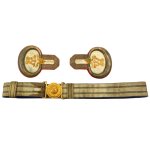
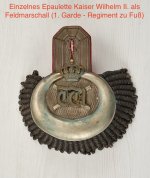
Below (white background photo) seems to show a version where the half moon is gold, even with the W cypher on it?

Forgive me for not following, either the signifiance of the gold moon vs silver moon epaulettes, of course I understand crossed batons indicate field marshal status, but both silver and gold variants for one rank? Or did you mean the gold star version was worn on non-parade functions.

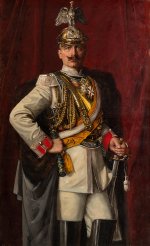
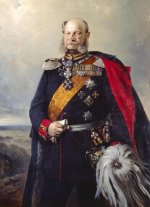
Secondly, some portraits of Wilhelm do not have any aiguillettes (for example this post's third painting--any elucidation on that?)

Thirdly, is it correct that the blackened red roped cuirass is the normal functional cuirass, and the tombac polished cuirass only for parade? Or is he representing a kurassier division within the garde du korps? As he wear both types in different portraits, I'm just trying to work this out.

I do know how to distinguish the enlisted ve officer tombac cuirasses (lion's head, raised steel edge on officers) and pickelhauben (gold crown on eagle, cross shaped eagle base, trefoil cockade mount, ridge on back for later models, etc) which took a few days of reading around, but I have to say I'm still stumped on these other aspects!

Thank you for helping.

6600c2e640a861b188bd67d45854e800.jpgIMG_7661.JPGImage 25.jpg
 
Forgive me for not following, either the signifiance of the gold moon vs silver moon epaulettes, of course I understand crossed batons indicate field marshal status, but both silver and gold variants for one rank? Or did you mean the gold star version was worn on non-parade functions
You wanted to re-construct the personal GdC epaulets of Emperor Wilhelm II. That’s why I added the link from the forum warrelics, which shows pretty clear that he wore epaulets with a golden half moon, silver braids and just one golden star in the center of the field (no batons). The underlay was red. You can see that it his personal GdC uniform, because of the medals. Of course he had more GdC uniforms then one, so the other add on to the field are plausible as well. As far as I know there was no special rule how the epaulets design of the King should look like. Normally it should be in acc. to the clothing regulations, but I think nobody would have criticized the Emperor for a different design.
Secondly, some portraits of Wilhelm do not have any aiguillettes (for example this post's third painting--any elucidation on that?)
The cords worn on the uniforms of Emperor Wilhelm II and the officers in the army were primarily insignia of special functions, positions or personal honors. They served a representative purpose, indicating high rank or membership of the personal staff (à la suite), particularly in the case of officers and adjutants. Golden cords emphasized the status of the wearer. If he wasn't wearing any cords, it was probably because these were early photographs, taken before he became King or shortly after he became King.
Thirdly, is it correct that the blackened red roped cuirass is the normal functional cuirass, and the tombac polished cuirass only for parade? Or is he representing a kurassier division within the garde du korps? As he wear both types in different portraits, I'm just trying to work this out.
This is what I have about the different cuirass colors:
  • Enlisted men cuirass M1845 (for line cuirassier regiments). For enlisted men and non-commissioned officers of regiments 1-8, without non-commissioned officers of regiments 2 and 6: Steel plate with brass fittings, central shot test, straps with 16 scales on hinges and belly strap for closure.
  • Officer cuirass from about 1900 for line cuirassier regiments. For officers of the regiments 3-5, 7 and 8: Nickel-plated thin steel plate, edges also nickel-plated, gold-plated long scale chains on lion's head hinges, clasps decorated with oak leaves, quilted silk lining with cuffs.
  • Enlisted men’s cuirass M1845 for guard regiments. For enlisted men and non-commissioned officers: Based on French models or French trophies, heavy cast steel covered with brass, brass ring chains on the shoulder straps, linen lining with cuffs.
  • Parade cuirass for enlisted men of the Gardes du Corps. Black lacquered sheet iron with red wool cord attached to the outside, brass fittings, linen lining with cuffs, appliqué trophy of the M1912 ring collar. Originally, black parade cuirasses were presented to the GdC as a gift from the Russian Tsar in 1814. These were replaced in 1897 by Kaiser Wilhelm II with the more elegant design shown here on the occasion of the 100th birthday of his grandfather Wilhelm I.
  • Sergeant's cuirass for guards and KR6 around 1870 (officer's uniform). Cuirass for non-commissioned officers, steel plate covered with brass sheet metal, nickel-plated edging, leather shoulder straps trimmed with brass scales, linen lining without cuffs. Differs from the officer's version in that it has no oak leaves on the clasps and no lion's head hinges.
  • Officer's cuirass circa 1870 for line regiments. For officers of regiments 3, 4, 5, 7, and 8, nickel-plated thin steel plate, edges also nickel-plated, gold-plated rivets, gold-plated long scale chains on lion's head hinges, clasps decorated with oak leaves, quilted silk lining with cuffs.
  • Enlisted men's cuirass M1845 for the Life Cuirassier Regiment. Steel plate with brass fittings, central shot test, straps with 16 scales on hinges and belly strap for closure.
  • Officer's cuirass M1844 for the Life Cuirassier Regiment. Nickel-plated thin steel sheet, edges gold-plated, gold-plated long scale chains on lion's head hinges, clasps decorated with oak leaves, applied officer's trophy of the M1896 ring collar, quilted silk lining with cuffs; from 1844 onwards, the LKR was the only regiment to have gold-plated edging, initially with silver-plated and later with gold-plated rivets.
(Source: www.kuerassierregimenter.de/ausruestung.php?det=&did=52)
 
You wanted to re-construct the personal GdC epaulets of Emperor Wilhelm II. That’s why I added the link from the forum warrelics, which shows pretty clear that he wore epaulets with a golden half moon, silver braids and just one golden star in the center of the field (no batons). The underlay was red. You can see that it his personal GdC uniform, because of the medals. Of course he had more GdC uniforms then one, so the other add on to the field are plausible as well. As far as I know there was no special rule how the epaulets design of the King should look like. Normally it should be in acc. to the clothing regulations, but I think nobody would have criticized the Emperor for a different design.

The cords worn on the uniforms of Emperor Wilhelm II and the officers in the army were primarily insignia of special functions, positions or personal honors. They served a representative purpose, indicating high rank or membership of the personal staff (à la suite), particularly in the case of officers and adjutants. Golden cords emphasized the status of the wearer. If he wasn't wearing any cords, it was probably because these were early photographs, taken before he became King or shortly after he became King.

This is what I have about the different cuirass colors:
  • Enlisted men cuirass M1845 (for line cuirassier regiments). For enlisted men and non-commissioned officers of regiments 1-8, without non-commissioned officers of regiments 2 and 6: Steel plate with brass fittings, central shot test, straps with 16 scales on hinges and belly strap for closure.
  • Officer cuirass from about 1900 for line cuirassier regiments. For officers of the regiments 3-5, 7 and 8: Nickel-plated thin steel plate, edges also nickel-plated, gold-plated long scale chains on lion's head hinges, clasps decorated with oak leaves, quilted silk lining with cuffs.
  • Enlisted men’s cuirass M1845 for guard regiments. For enlisted men and non-commissioned officers: Based on French models or French trophies, heavy cast steel covered with brass, brass ring chains on the shoulder straps, linen lining with cuffs.
  • Parade cuirass for enlisted men of the Gardes du Corps. Black lacquered sheet iron with red wool cord attached to the outside, brass fittings, linen lining with cuffs, appliqué trophy of the M1912 ring collar. Originally, black parade cuirasses were presented to the GdC as a gift from the Russian Tsar in 1814. These were replaced in 1897 by Kaiser Wilhelm II with the more elegant design shown here on the occasion of the 100th birthday of his grandfather Wilhelm I.
  • Sergeant's cuirass for guards and KR6 around 1870 (officer's uniform). Cuirass for non-commissioned officers, steel plate covered with brass sheet metal, nickel-plated edging, leather shoulder straps trimmed with brass scales, linen lining without cuffs. Differs from the officer's version in that it has no oak leaves on the clasps and no lion's head hinges.
  • Officer's cuirass circa 1870 for line regiments. For officers of regiments 3, 4, 5, 7, and 8, nickel-plated thin steel plate, edges also nickel-plated, gold-plated rivets, gold-plated long scale chains on lion's head hinges, clasps decorated with oak leaves, quilted silk lining with cuffs.
  • Enlisted men's cuirass M1845 for the Life Cuirassier Regiment. Steel plate with brass fittings, central shot test, straps with 16 scales on hinges and belly strap for closure.
  • Officer's cuirass M1844 for the Life Cuirassier Regiment. Nickel-plated thin steel sheet, edges gold-plated, gold-plated long scale chains on lion's head hinges, clasps decorated with oak leaves, applied officer's trophy of the M1896 ring collar, quilted silk lining with cuffs; from 1844 onwards, the LKR was the only regiment to have gold-plated edging, initially with silver-plated and later with gold-plated rivets.
(Source: www.kuerassierregimenter.de/ausruestung.php?det=&did=52)
I'm so sorry but it's very difficult to follow you, I am new to this. By your first comment, can you expplain why there are silver moon epaulettes as well as gold moon epaulettes? Was he promoted to gold at some point? Conversely, the photo with the white background does seem to show the W cypher with the gold moon?

Secondly, with the cuirass, I'm just trying to figure out when he would decide to wear the black cuirass vs the mirror polished tombac one.
 
The epaulets for his GdC uniform were from silver color with a golden half moon, a white or silver field and a ponceau red underlay. On the field he wore a small golden star.

The GdC always wore a cuirass of black steel. Cuirasses from other collors were worn by other cuirassier regregiments.
No and no. Silver half moon, not gold. Silver field, not white. Black cuirass and yellow cuirass. No star on the field. Two stars before he became Feldmarschall and then two battons, crossed with W for his grandfather.
Same Epaulettes for Gardes du Corps and for the 1.Garde-Regiment zu Fuss.
 
The uniform in the link was to see in the old exibition of the German Historic Museum in Berlin. This is not the uniform of Kaiser Wilhelm.
 
This epaulette is not for Gardes du Corps. This is for the uniform of a general. The material of the field is different.
 

Attachments

  • Image 9.jpg
    Image 9.jpg
    104.3 KB · Views: 7
This epaulette is not for Gardes du Corps. This is for the uniform of a general. The material of the field is different.
I take it the gold half moons are colouring mistakes then? I've noticed the silver trim on his helmet is coloured yellow instead of silver. Have you got info on what shape the aiguillette would be? As the type with the attached braided shoulderboard wouldn't work--there's already an epaulette?IMG_7658.JPG
 
I take it the gold half moons are colouring mistakes then? I've noticed the silver trim on his helmet is coloured yellow instead of silver. Have you got info on what shape the aiguillette would be? As the type with the attached braided shoulderboard wouldn't work--there's already an epaulette?View attachment 72856
How were they kept on the armour? As there aren't really buttons to hang them by. I suppose same applies for the breast star, medal rack.
 
How were they kept on the armour? As there aren't really buttons to hang them by. I suppose same applies for the breast star, medal rack.
The epaulettes were attached to the Koller!
-the long epaulettes are the ones worn with the cuirass.
 
The epaulettes were attached to the Koller!
-the long epaulettes are the ones worn with the cuirass.
I am aware that the epaulettes for wear with armour are longer, but do you have photos or figures to compare? Any comments on aiguillettes?
 
I am aware that the epaulettes for wear with armour are longer, but do you have photos or figures to compare? Any comments on aiguillettes?
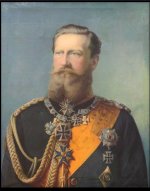
Kronprinz Friedrich Wilhelm, the later Friedrich III.
 

Attachments

  • Screenshot_20260125_203713_Samsung Internet.jpg
    Screenshot_20260125_203713_Samsung Internet.jpg
    223.7 KB · Views: 5
No and no. Silver half moon, not gold. Silver field, not white. Black cuirass and yellow cuirass. No star on the field. Two stars before he became Feldmarschall and then two battons, crossed with W for his grandfather.
Same Epaulettes for Gardes du Corps and for the 1.Garde-Regiment zu Fuss.
My apologies. You’re right; it’s not a uniform of Emperor WII. I didn’t read the texts carefully.
 
Yes, but not for Gardes du Corps. This picture shows Zar Nikolaus I. in the uniform of the 6.Kürassier-Regiment.
2000000945170-b1.jpg


I see too many of Kaiser Wilhelm in epaulettes (including Garde du Korps) uniforms for it to be a colourization mistake. The only colourization mistake seems to be one depiction where the Wappen of the GdK helmet was also incorrectly coloured tombac to match the helmet. Here are some examples I have found of silver fringe cum gold half moon combos I have found that are Prussian. Can you tell me what this says rank wise? I certainly don't see any bimetallic combos of Wilhelm II sans aiguillettes (in GdK). It seems in terms of progression, he wore the all-silver epaulettes, then graduates to wearing those plus gold aiguillettes, then finally the gold aiguillettes with bimetallic epaulettes. I'm only concerned with getting this accurate, to capture his outfit just before WWI broke out, so just want to ensure the colour is right.
 

Attachments

  • IMG_8689.JPG
    IMG_8689.JPG
    69.9 KB · Views: 12
  • IMG_8688.JPG
    IMG_8688.JPG
    192.5 KB · Views: 11
  • Image 10.jpg
    Image 10.jpg
    551.9 KB · Views: 10
  • Image 6.jpg
    Image 6.jpg
    108.3 KB · Views: 9
  • Image 5.jpg
    Image 5.jpg
    175.1 KB · Views: 9
  • IMG_8691.JPG
    IMG_8691.JPG
    61.7 KB · Views: 10
Back
Top