
Hello everyone
This is my first time posting here, and I hope some of you clever heads can help me.
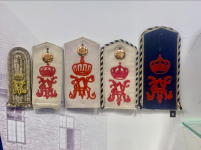
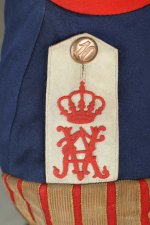
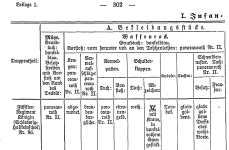
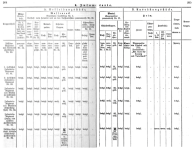
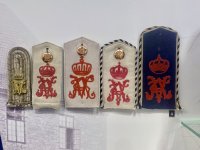
You see, the embroidery methods for M1895 shoulder boards have me quite confused. Shoulder boards for the bunte Rock are a pretty new topic for me, and one that I don't (yet) know much about. My question regards the cyphers and monograms of the boards: I see both hand-embroidery, chain-stitching, soutache and woolen monograms having being used, but is there a general rule of thumb as to what method would have been used when?
I'm particularly curious as to which method would have been used for issue-quality shoulder boards manufactured c. 1910, as I suppose private-purchase uniforms would use whatever method the customer preferred?
Best regards
Bertil
This is my first time posting here, and I hope some of you clever heads can help me.
You see, the embroidery methods for M1895 shoulder boards have me quite confused. Shoulder boards for the bunte Rock are a pretty new topic for me, and one that I don't (yet) know much about. My question regards the cyphers and monograms of the boards: I see both hand-embroidery, chain-stitching, soutache and woolen monograms having being used, but is there a general rule of thumb as to what method would have been used when?
I'm particularly curious as to which method would have been used for issue-quality shoulder boards manufactured c. 1910, as I suppose private-purchase uniforms would use whatever method the customer preferred?
Best regards
Bertil


 .
.